From Mendoza to Bariloche: The Start of Patagonia
Patagonia isn't just a word on a map. It's one landscape after another that leaves you speechless — with the inevitable travel mishaps that remind you this is nothing like an ordinary holiday.
Mendoza was the turning point. Behind us: the vast Argentine plains and weeks of dead-straight roads. Ahead: the mountains, the tracks, and Patagonia just starting to show itself.
Mendoza: Rest and Kendo
Three days off in Mendoza. We catch up on the travel journal and service the bikes. Thomas finds a small garage to replace his fuel hoses, which are starting to crack — a well-known issue on the AJP PR7. Good excuse to chat with the mechanic and pick up some route tips.
We shoot a three-month-in-Argentina recap video at Parque San Martín. Filming a video together takes a few more takes than expected — hard to coordinate without a script — but we put together something decent.
Kendo, of course. The Mendoza club is pretty quiet, it being holiday season: just two people in armor and a few Kuysha without gear. Still, we're genuinely touched by the welcome, and the Sensei seems delighted to have practiced with Adeline. He hands us two tenugui on the way out. We really are going to run out of space on the bikes.
Route 40 and the First Real Tracks
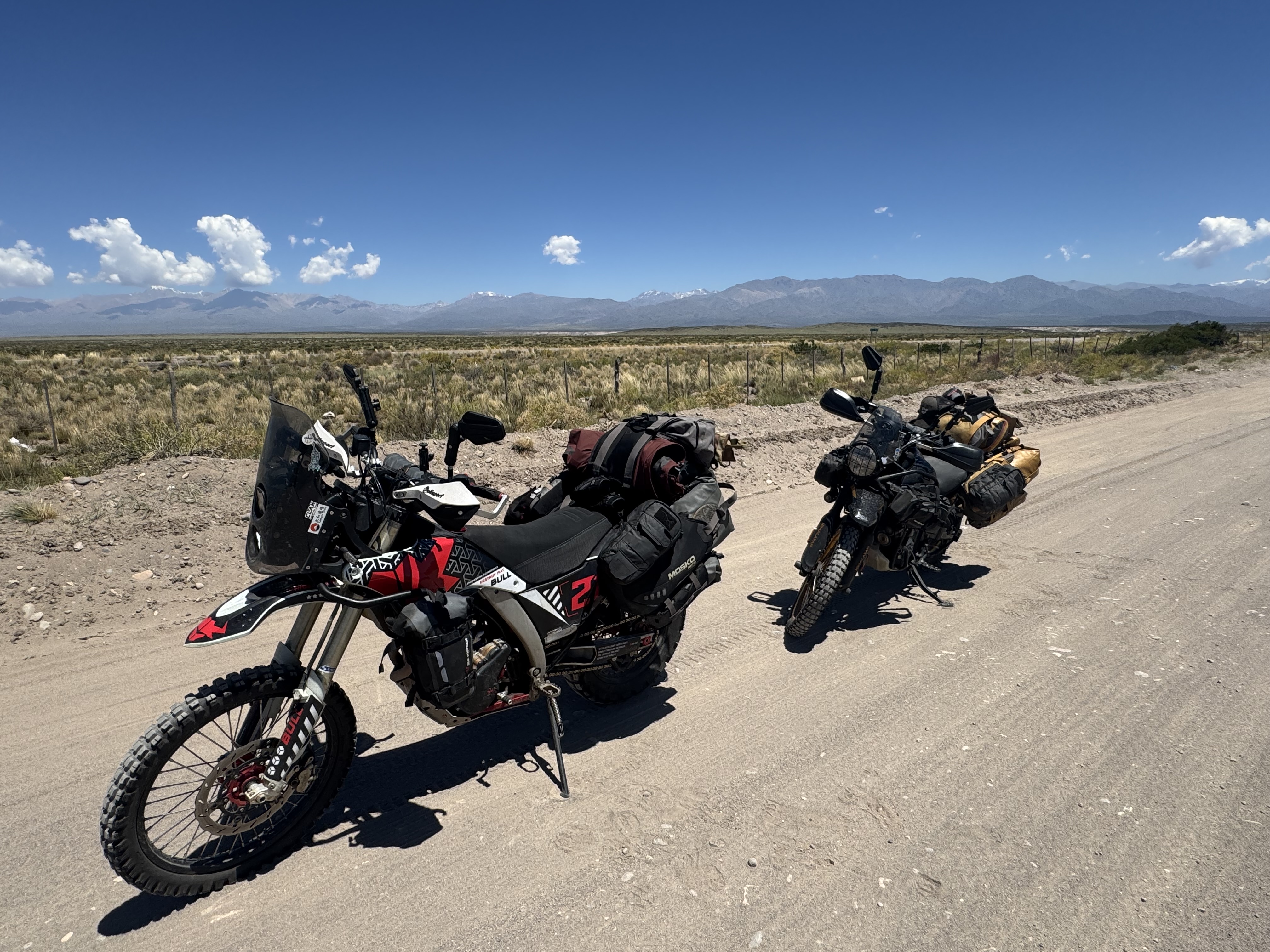
We head back toward Bariloche on the legendary route 40. The first 100 km out of Mendoza are straight, but with mountains in the background it's a pleasant ride. Then we hit the ripio. Hell. Not particularly technical in terms of gradient, but deep fesh fesh in places, and trucks kicking up huge clouds of sand dust. Several near-falls, but we get through unscathed. 80 km of track, and it wasn't all fun.
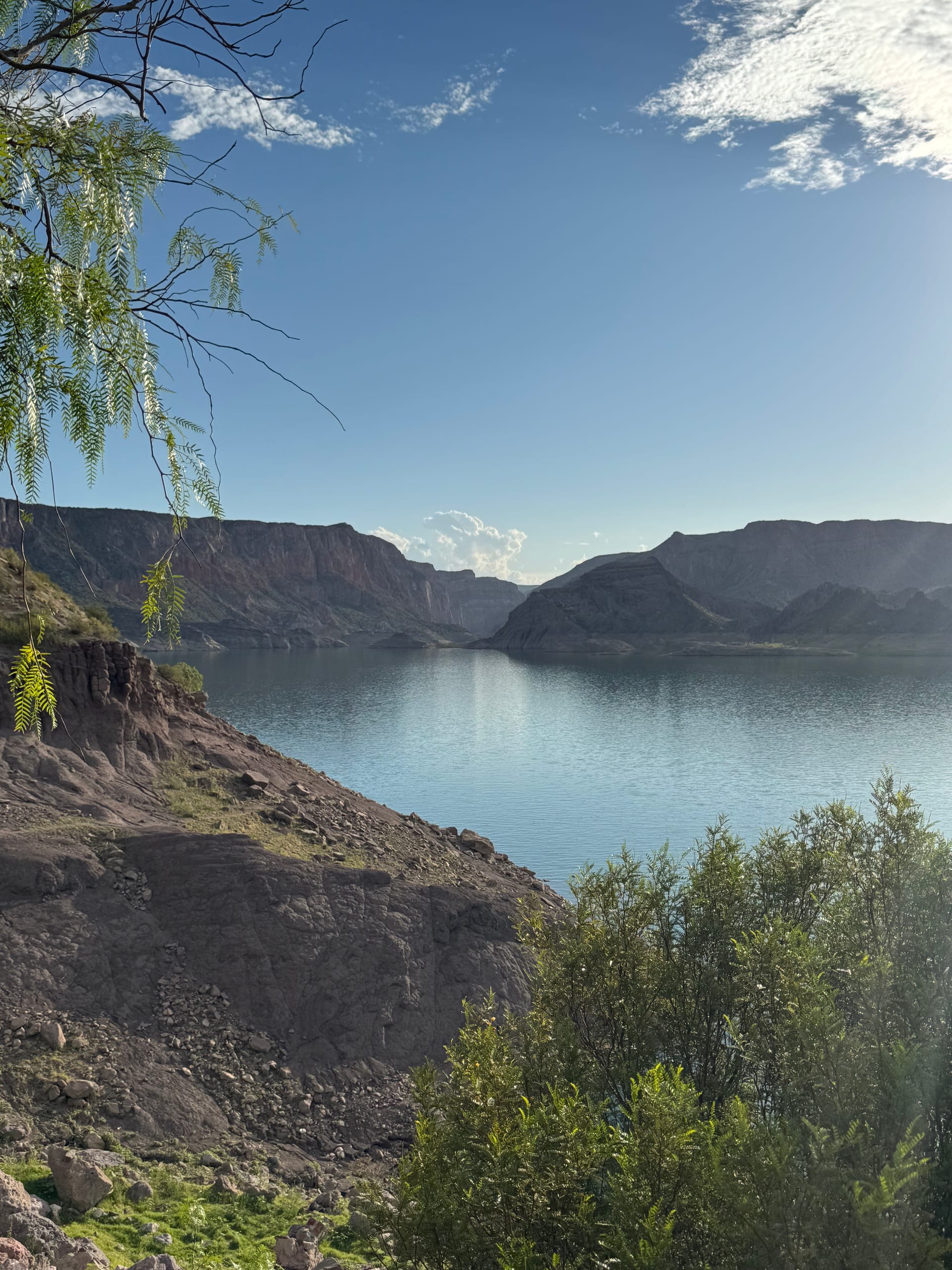
Further along, the landscape starts looking like the Tarn Gorge — Argentine edition. Busy here in peak holiday season, perfect rafting country, beautiful but packed. We climb higher, cross a hydroelectric dam, views over an artificial lake ringed by rock. Stunning. We pitch the tent at a fishermen's campsite.
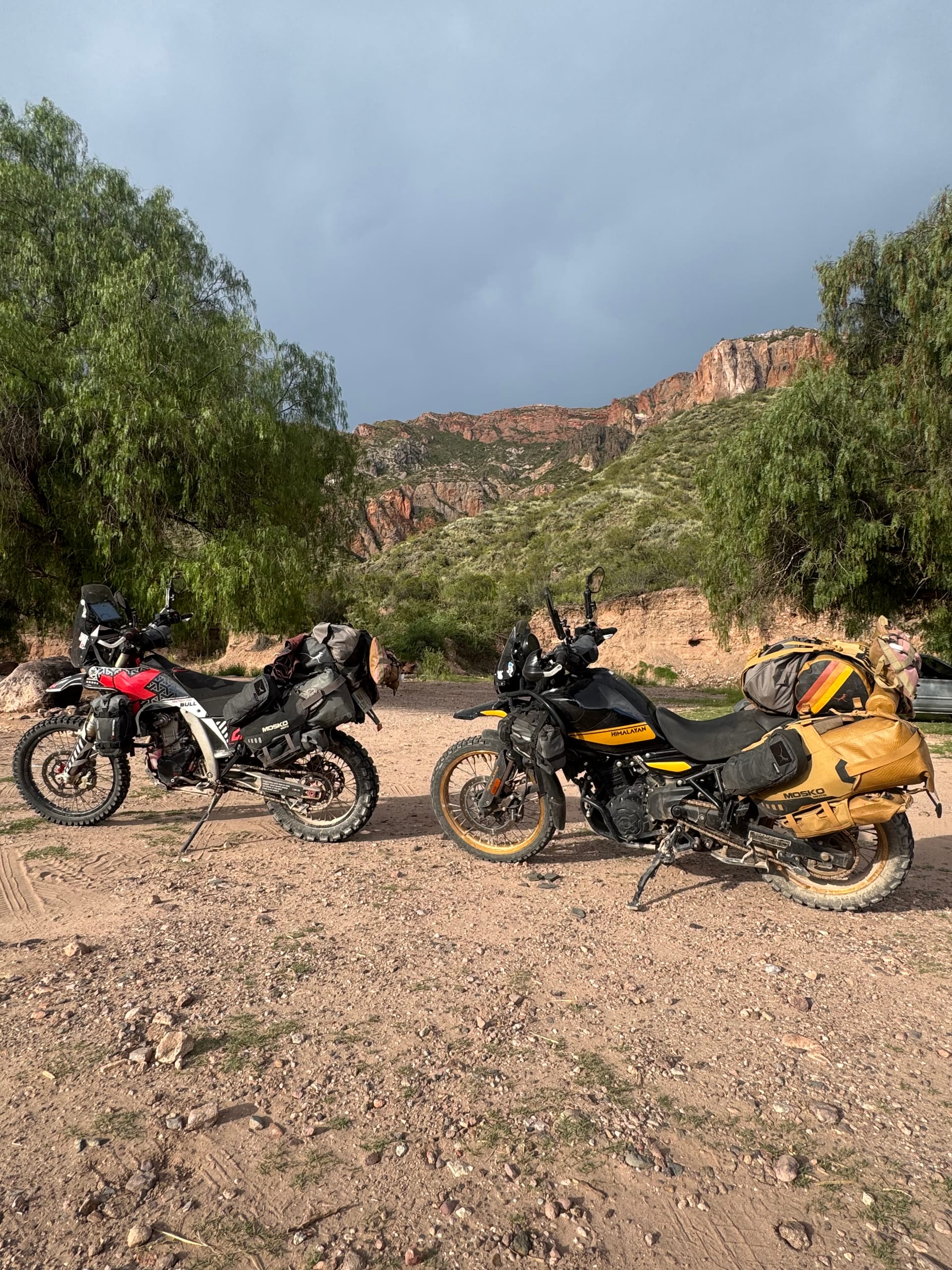
That's when everything unravels. Adeline realizes she's lost her cap and flip-flops — blown off somewhere on the road. Thomas discovers the fuel canister for our camp stove is leaking. He tries to fix it and snaps the pump cup: no more stove for cooking. We eat pizza at the campsite bar and search online for a solution: Mercado Libre shows a 25-day delivery time and nearly €100 for a new pump. We try to keep perspective and decide to deal with it in Chile. We collapse into bed exhausted.
When It Rains It Pours
Next morning, up at 7am with 250 km of track on the agenda. We try to check tyre pressure but the inflator isn't working… of course. Adeline thinks she's doing it wrong, Thomas gives it a go — nothing. Fine, that's how it is.
While asking the campsite manager if there's a shop nearby, we learn the road after El Nihuil is closed following a storm. Change of plan: we head into town to find an inflator and sort out the stove situation. After a few failed attempts at petrol stations and garages, we finally find what we need in a shop. Hallelujah. For the stove — no MSR dealers in Argentina, but we find a gas canister with a cooking head at an outdoor shop, that'll do for now. Adeline takes the opportunity to replace her flip-flops. All that's missing is a cap.
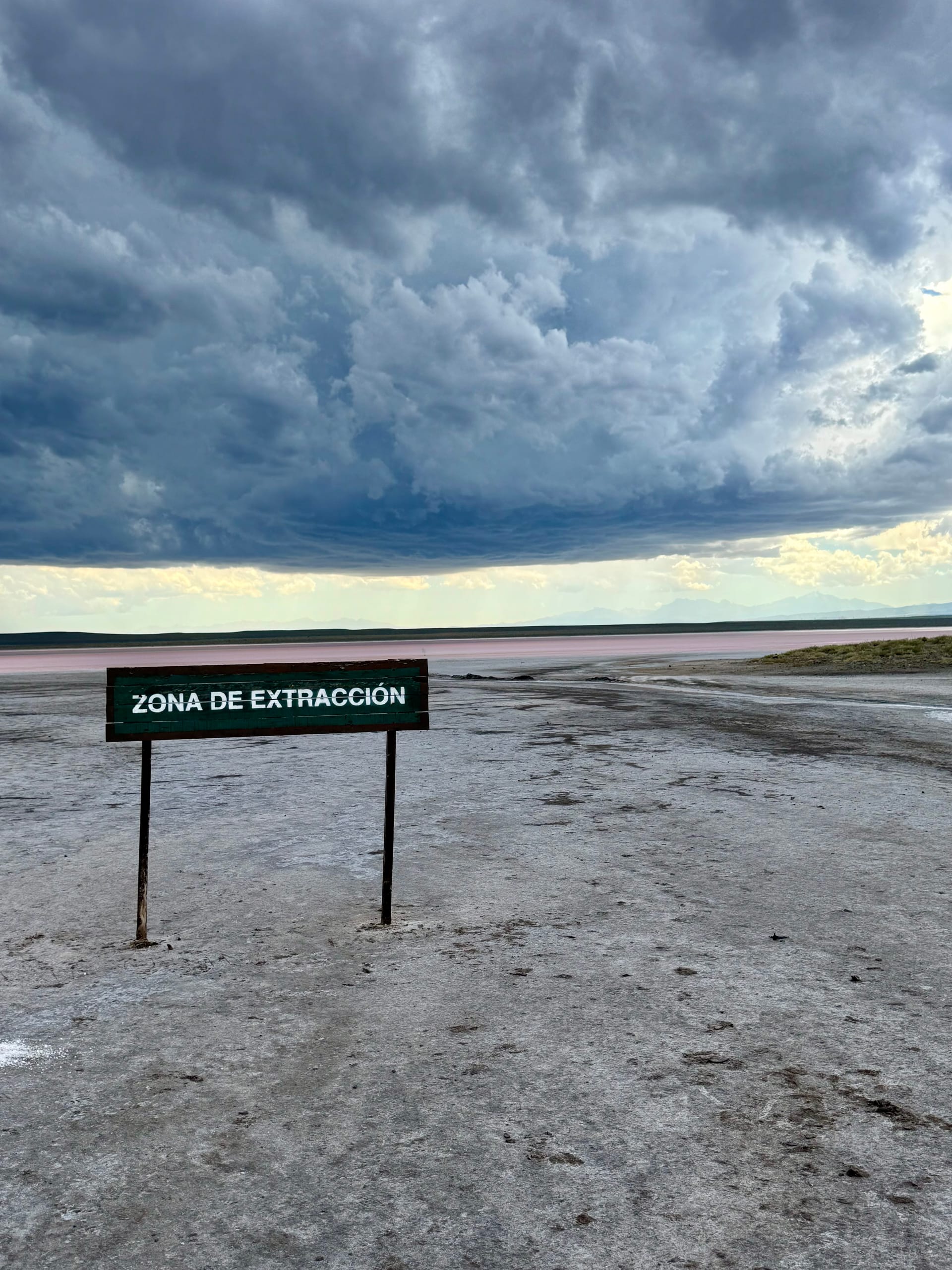
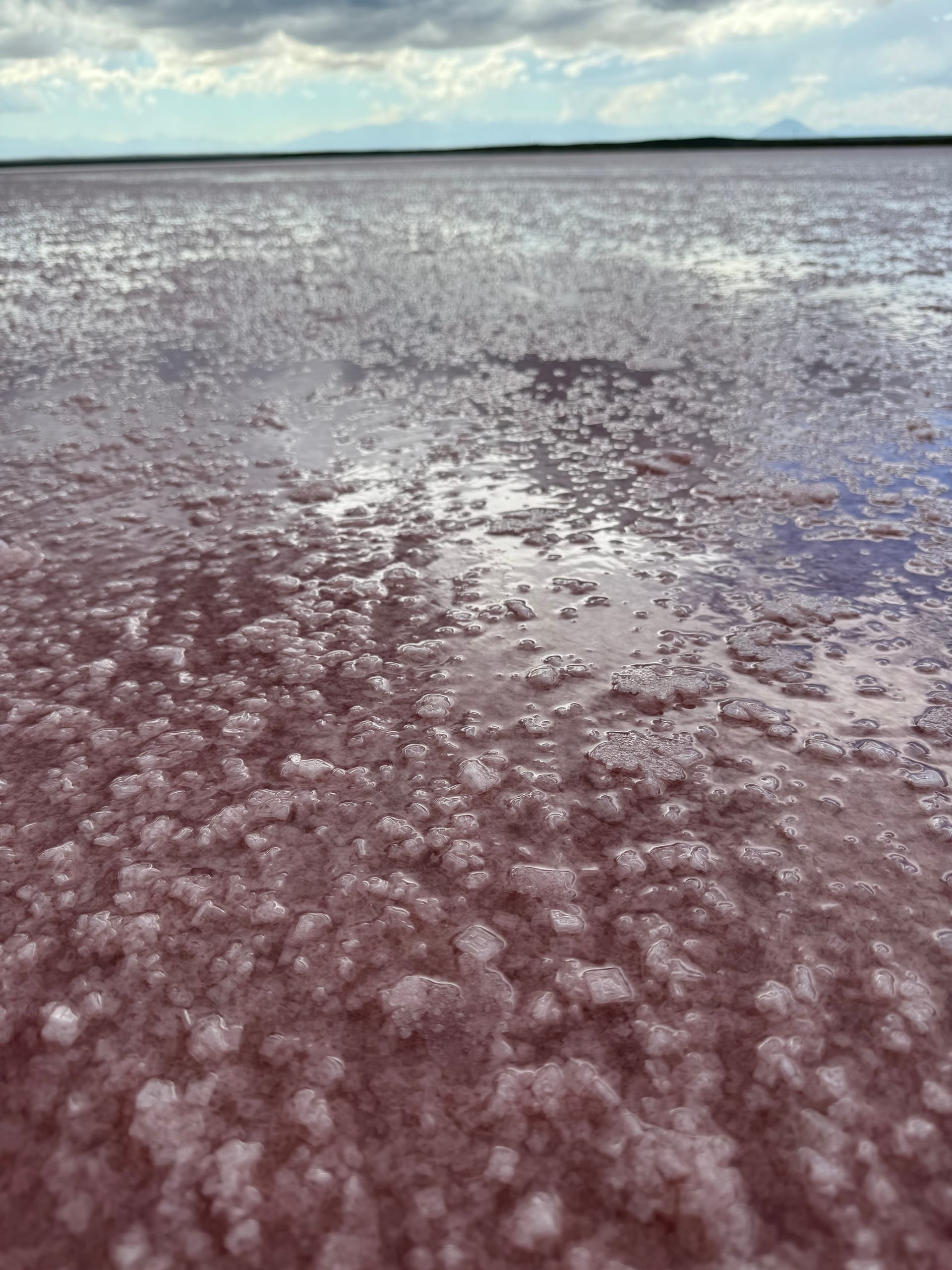
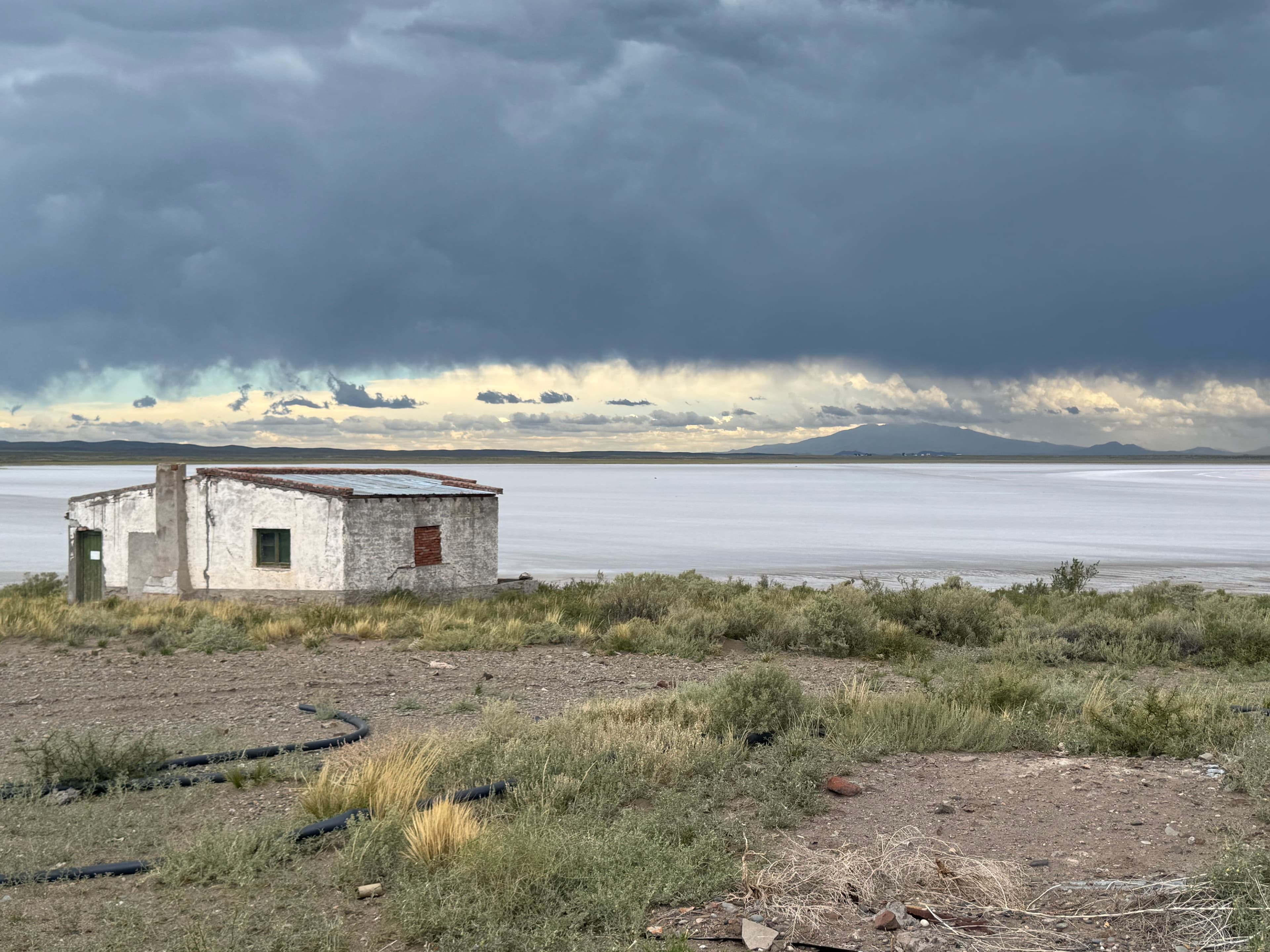
We set off toward Malargue on the national road. In the distance, something that looks like a stretch of water with pink and violet hues: the Diamante salt flats. We stop — it's magnificent. Storm clouds in the distance make the landscape even more dramatic. Just as we're about to leave, the site manager calls out that we can't go yet: a storm is coming. We take cover, and sure enough, ten minutes later a massive hailstorm hits. Good call staying.
El Camino de Carqueque
160 km planned through the mountains, entirely off-road. We're not quite sure what to expect, but it shouldn't be too brutal. From the very start, the scenery is stunning — and the further into the mountains we get, the higher we climb, the more beautiful it becomes. Words don't do it justice. We're not moving fast; there are too many stops for photos.
The climb goes smoothly, the track doesn't throw anything too technical at us. Around 1pm, we stop for lunch with a mountain view after 50 km. But what goes up must come down. The views are still incredible, but the hairpins on the descent have us working harder. Adeline goes down on one descent, Thomas helps her out several times, and we eventually make it through.
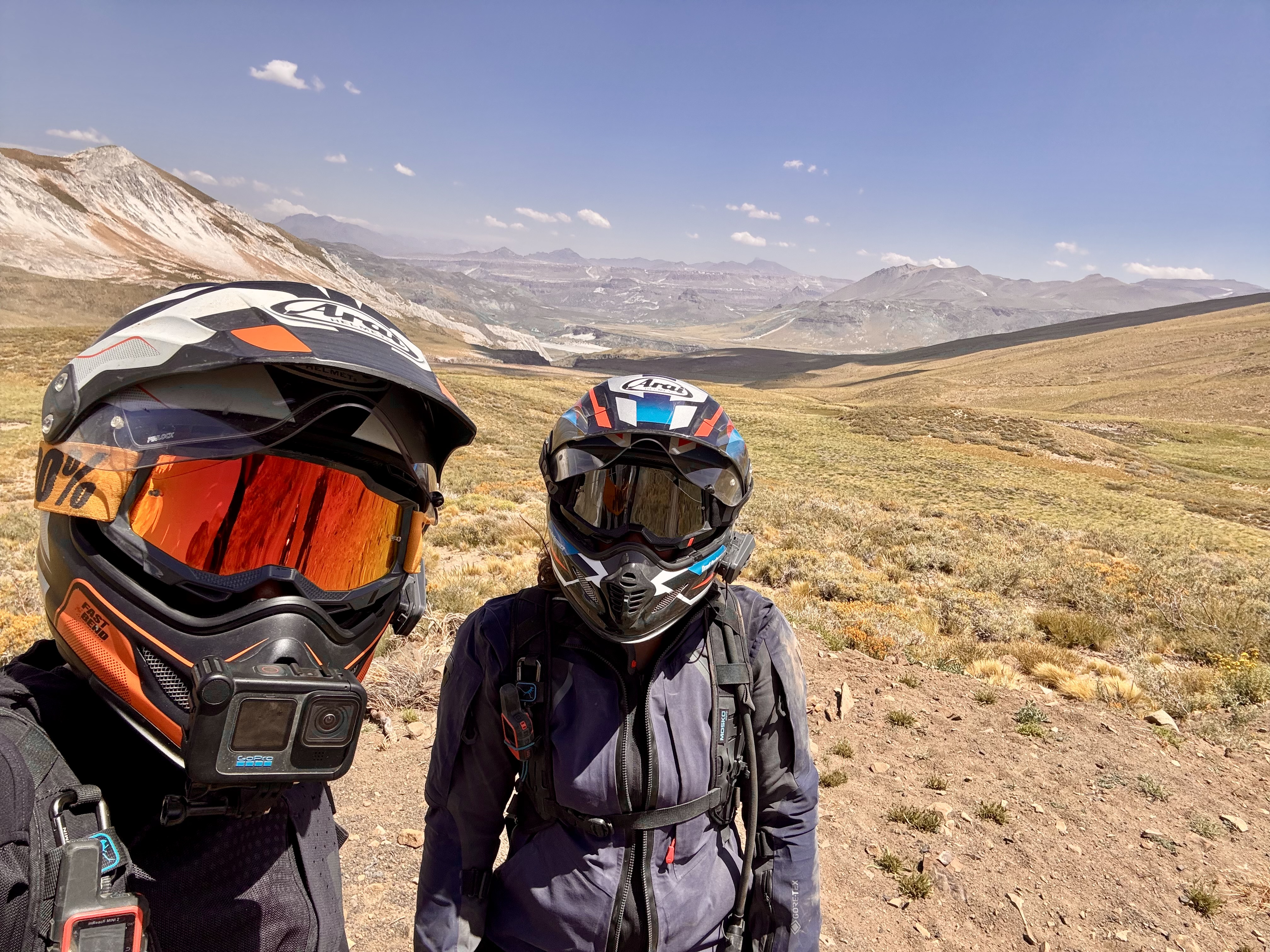
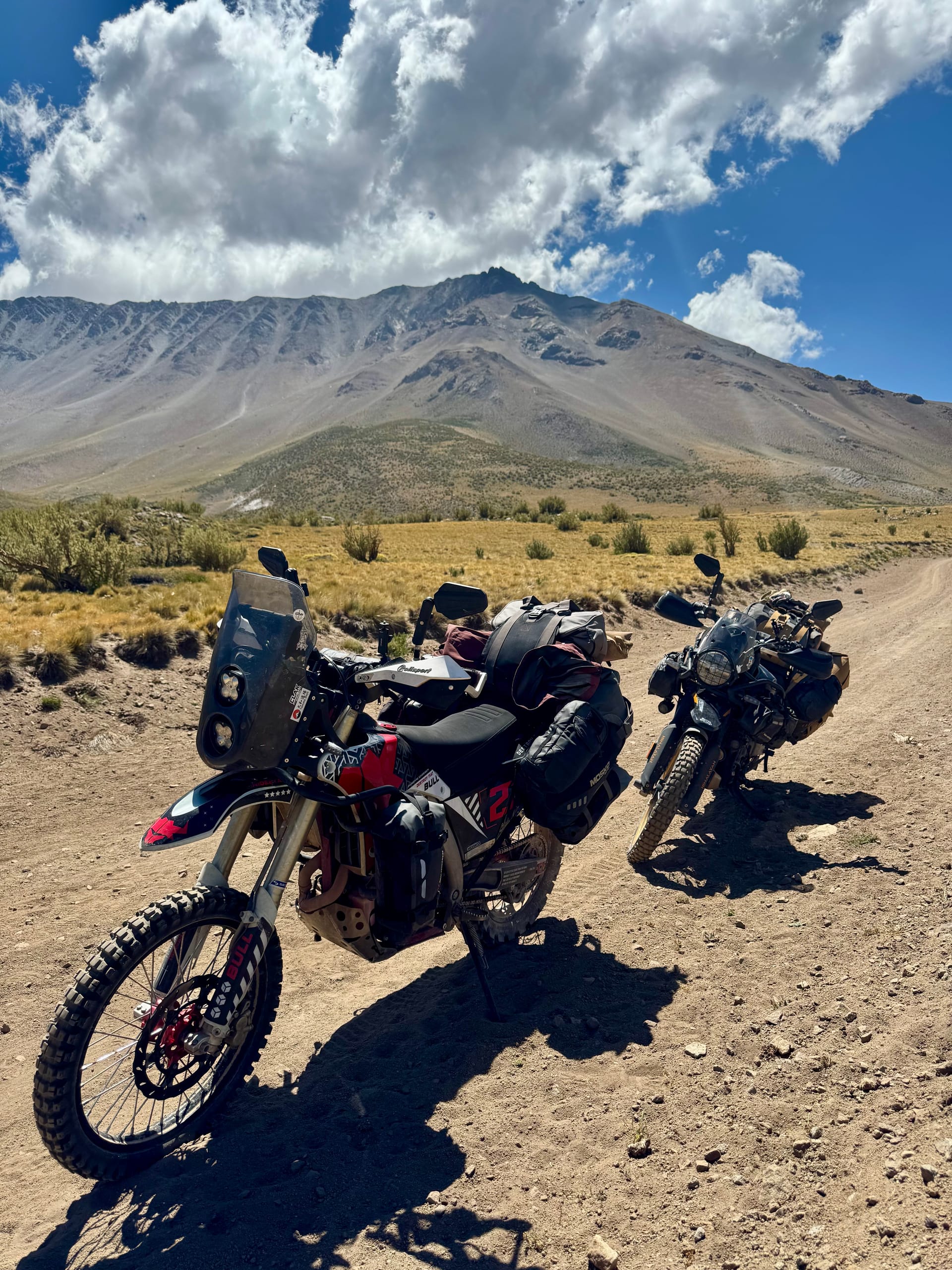
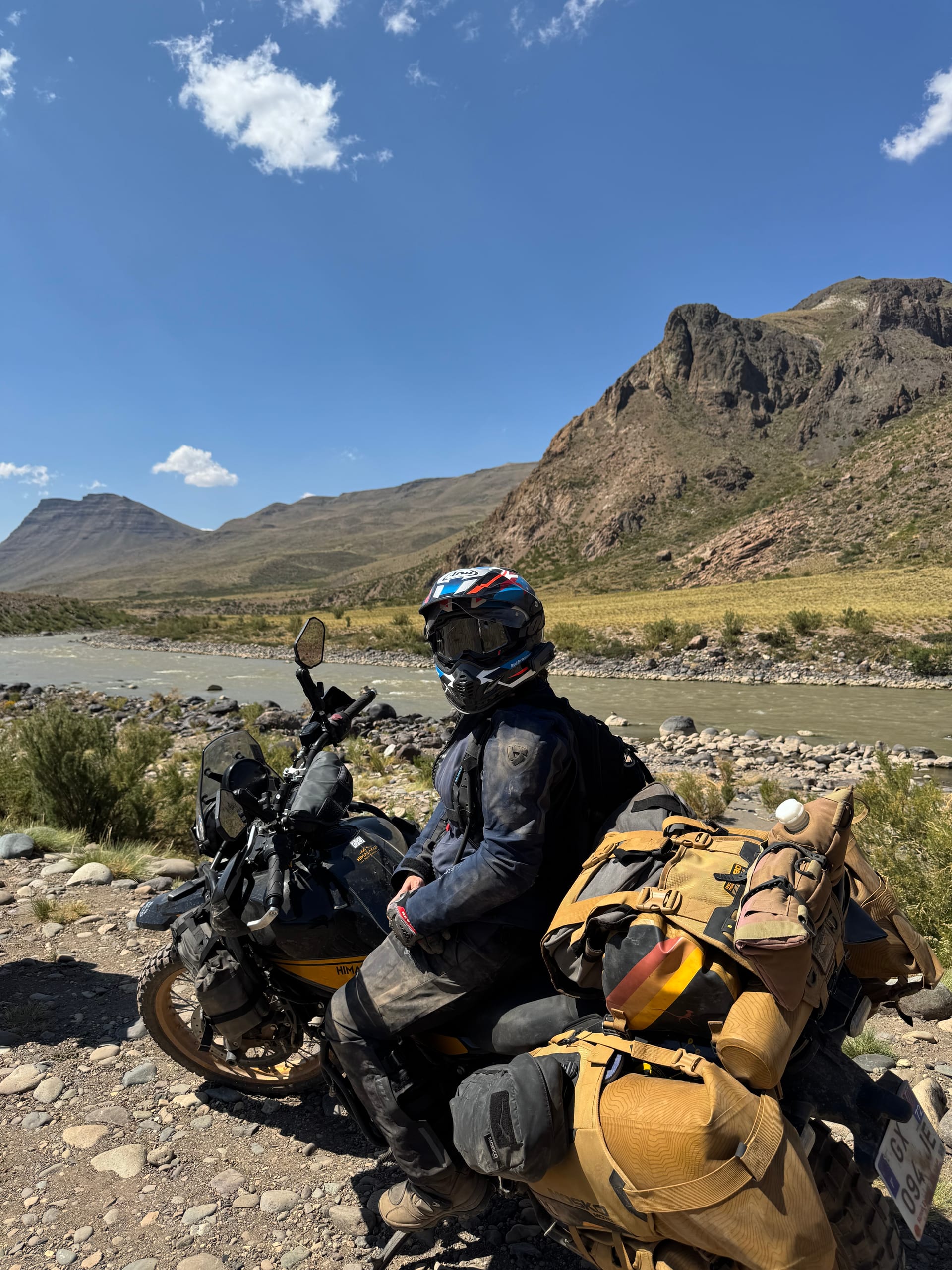
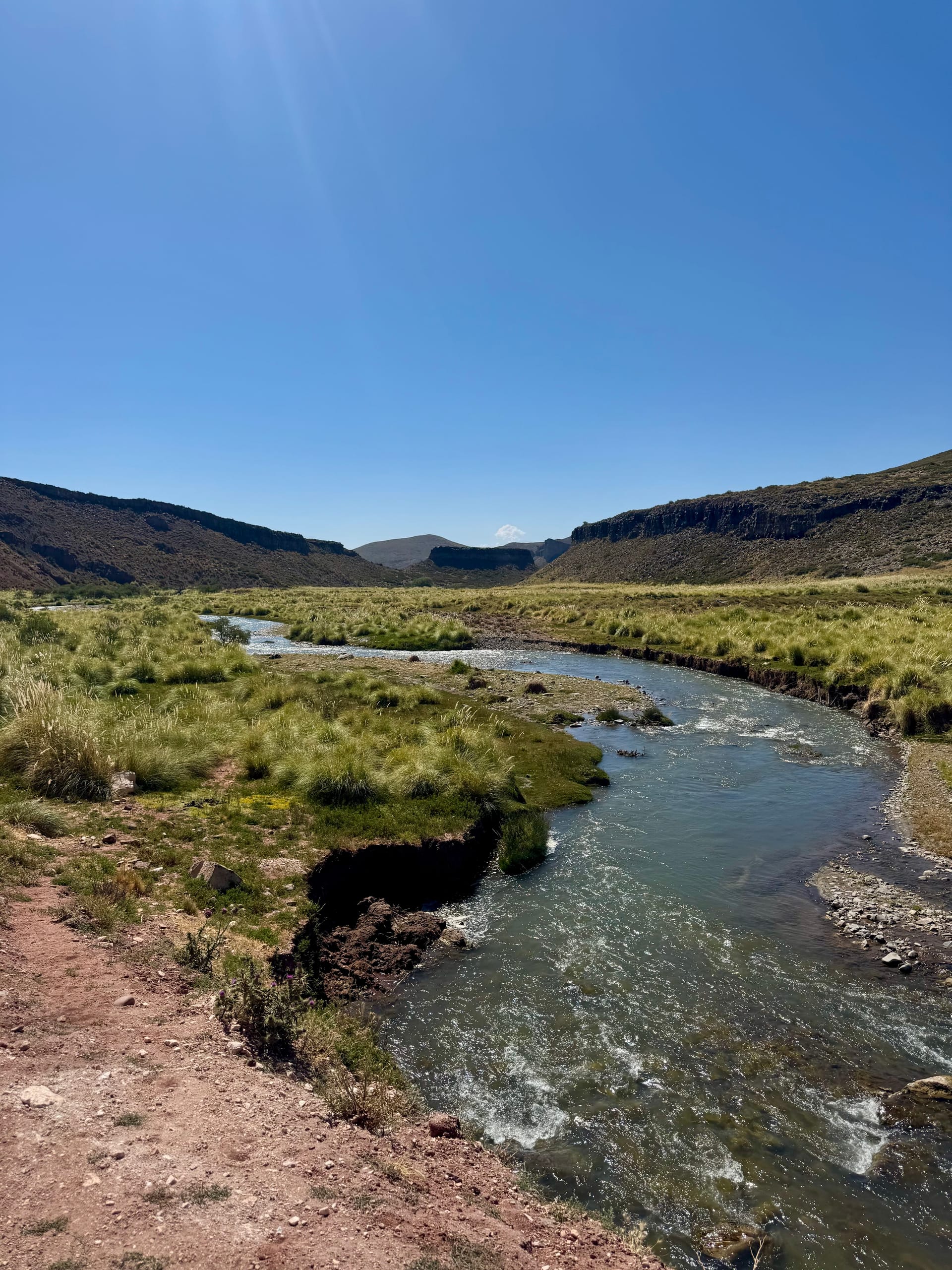
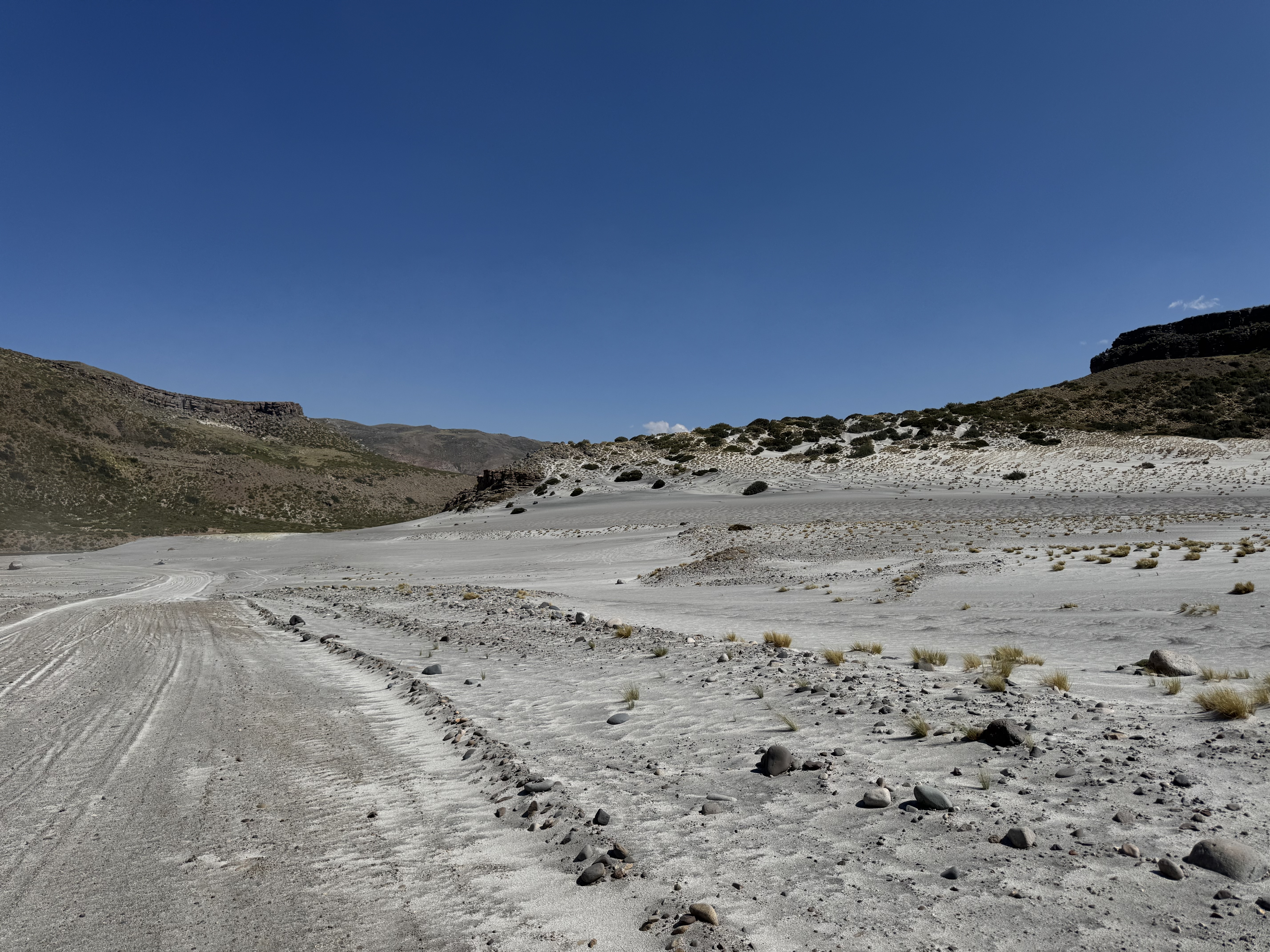
At the bottom of the last switchback descent, a stunning view opens over a river. It feels like a scene from a fantasy film. Then flat, wide ripio — should be easy… until we hit a vast stretch of white sand. Gorgeous, but Adeline hates sand. A wobble, a lurch off the track, and the bike is buried in a meter of sand. By sheer luck, two Argentine enduro rally riders happen to pass by and help haul the bike out. Five minutes and it's sorted. We'd have been in real trouble without them. We push on; Adeline tries to get her confidence back, but the brain takes a while to let go.
La Payunia Reserve: The Day It Was All Worth It
The next day we join route 40 then branch off toward the Payunia nature reserve. Technically we're not supposed to go without a guide, but we take our chances. The track is wide and easy, the landscapes already beautiful. We do wonder whether we're allowed to be riding past oil wells and pipelines, but we press on.
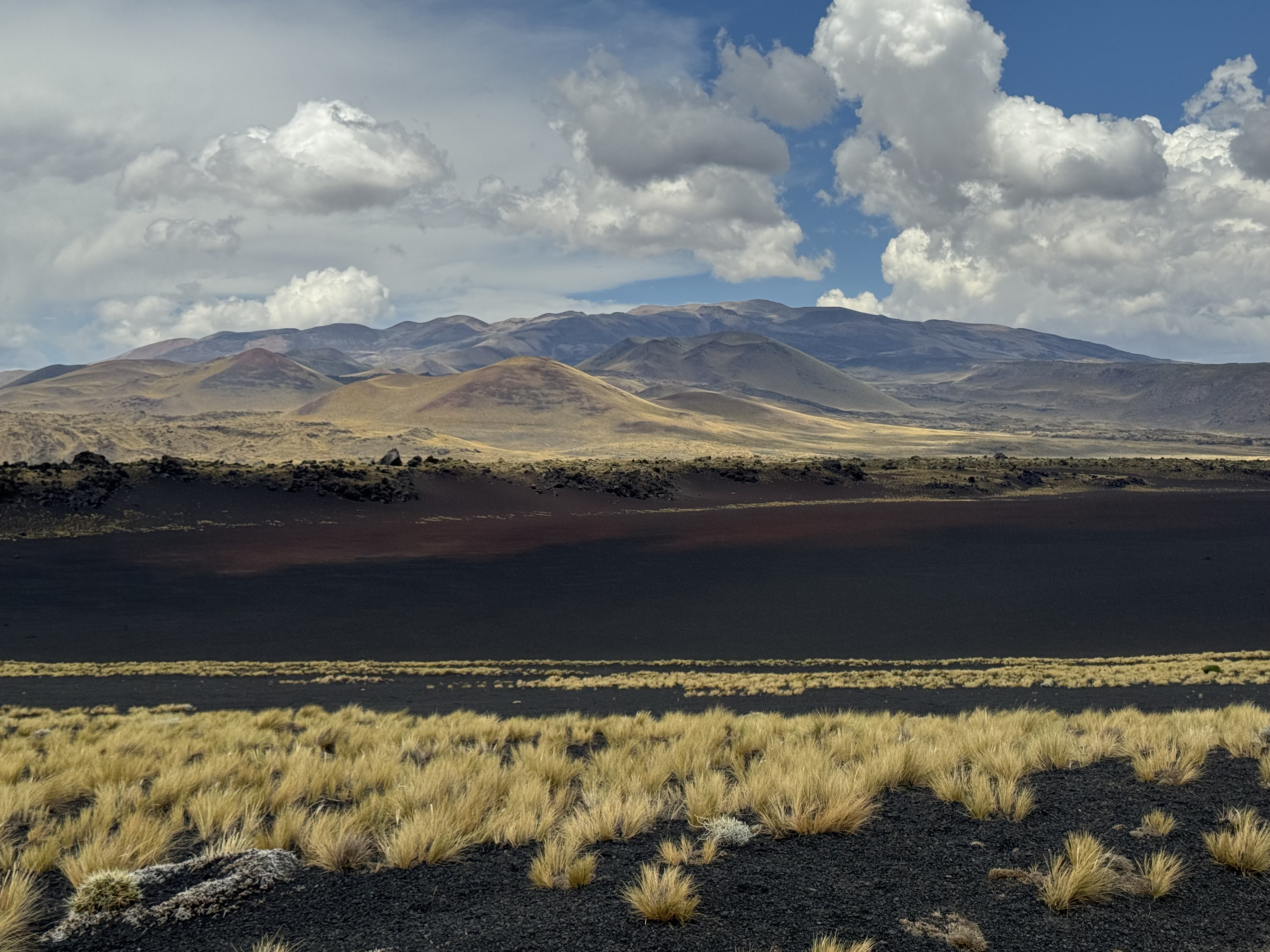
At the reserve entrance, we talk to the rangers. They let us through on one condition: keep moving, since other visitors pay for access to the park. We have lunch in front of the building and head off around 2:15pm. The tourist route stretches 22 km. Twenty-two kilometers of pure joy. Yesterday was beautiful, but this is staggering: the track is black and red with volcanic dust, the vegetation bright yellow — the color contrast is extraordinary. The kilometers fly by.
Then comes the hard part the rangers warned us about: rocks, sand, a narrow path for 24 km. And a storm hits us head on. Adeline had suggested stopping for shelter before going in; Thomas was hoping to outrun it. No luck. We consider turning back, but push forward instead. We end up sheltering under the tent flysheet as hail comes down. A proper disaster, but we're laughing about it.
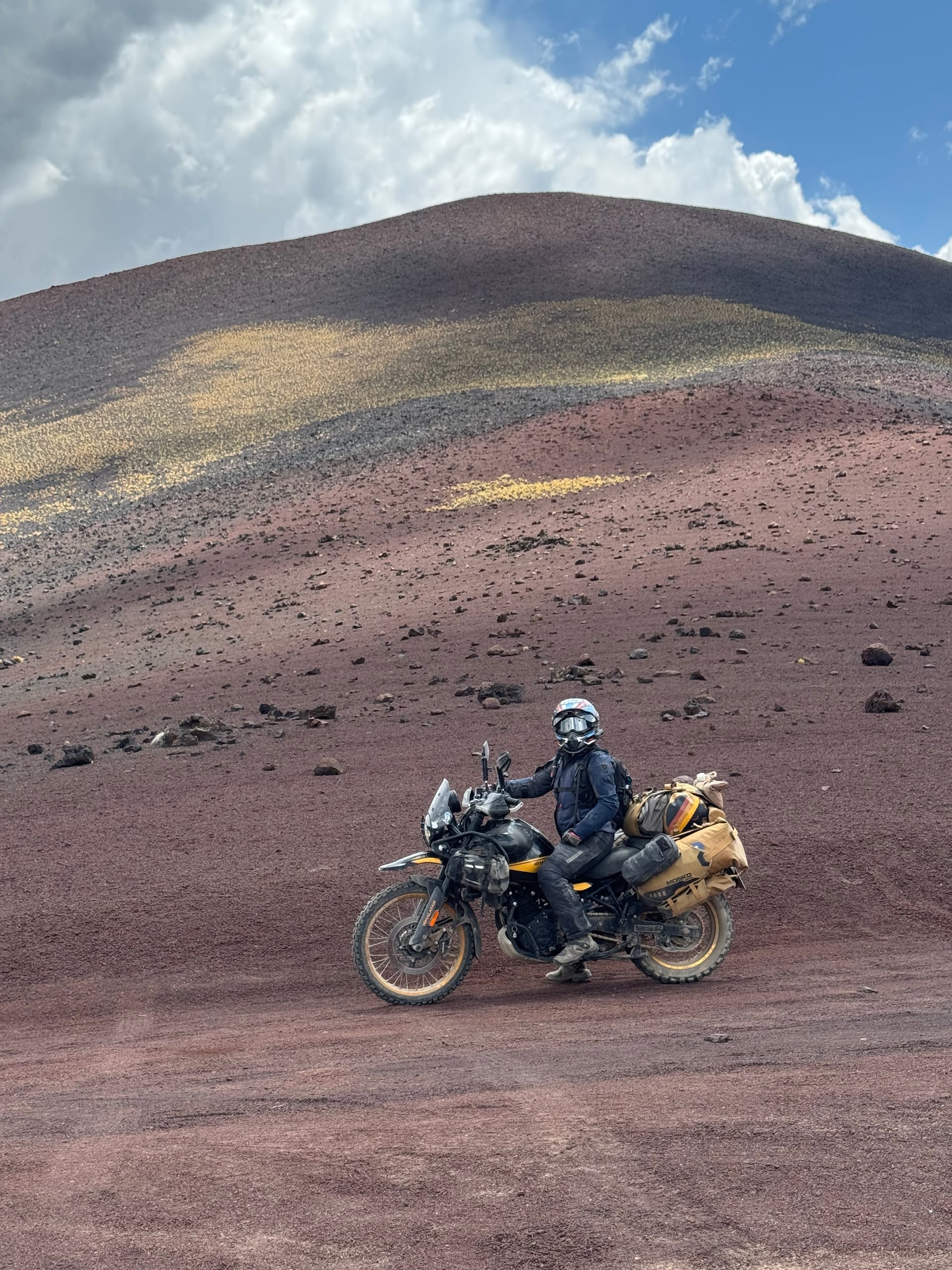
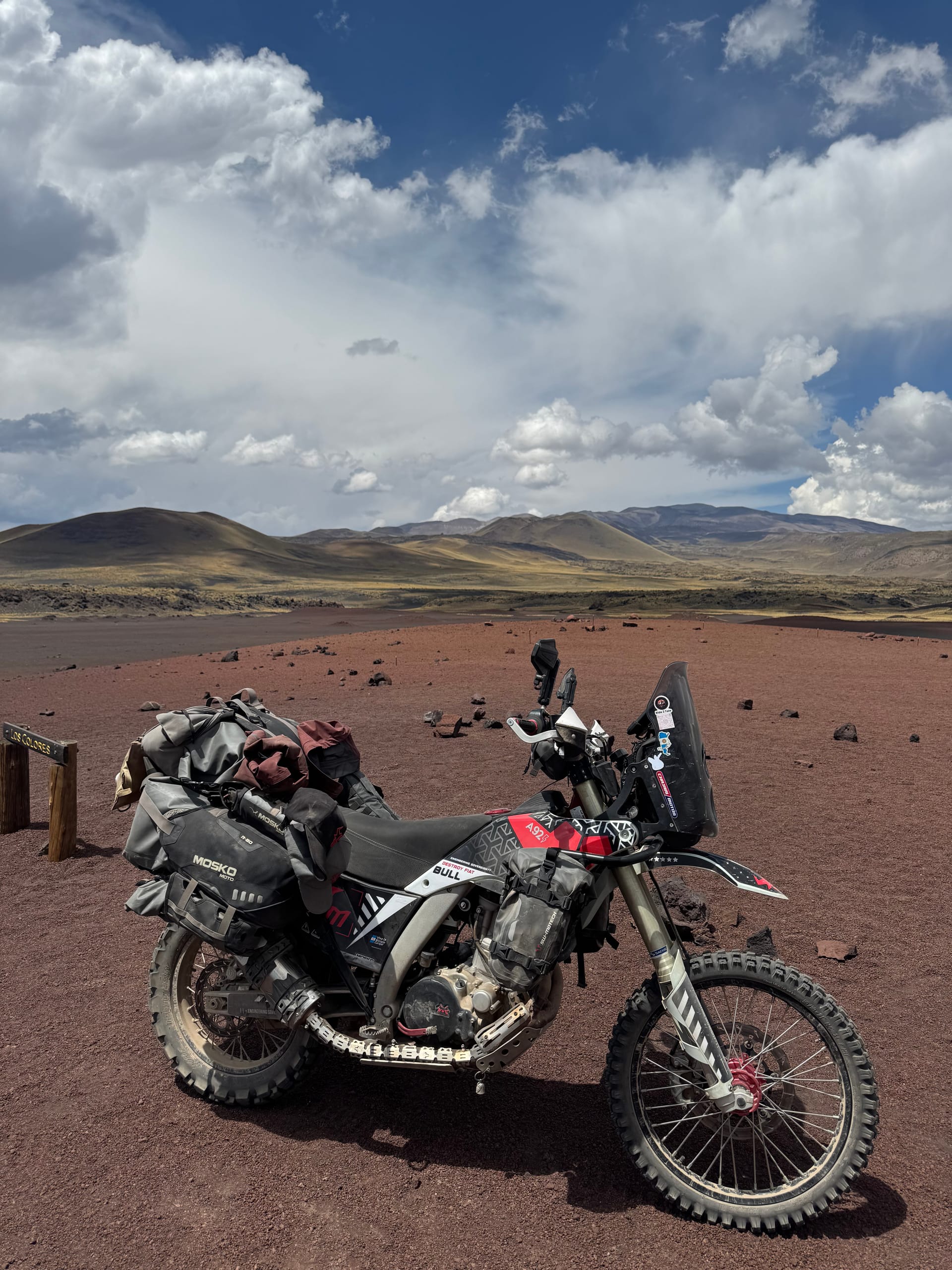
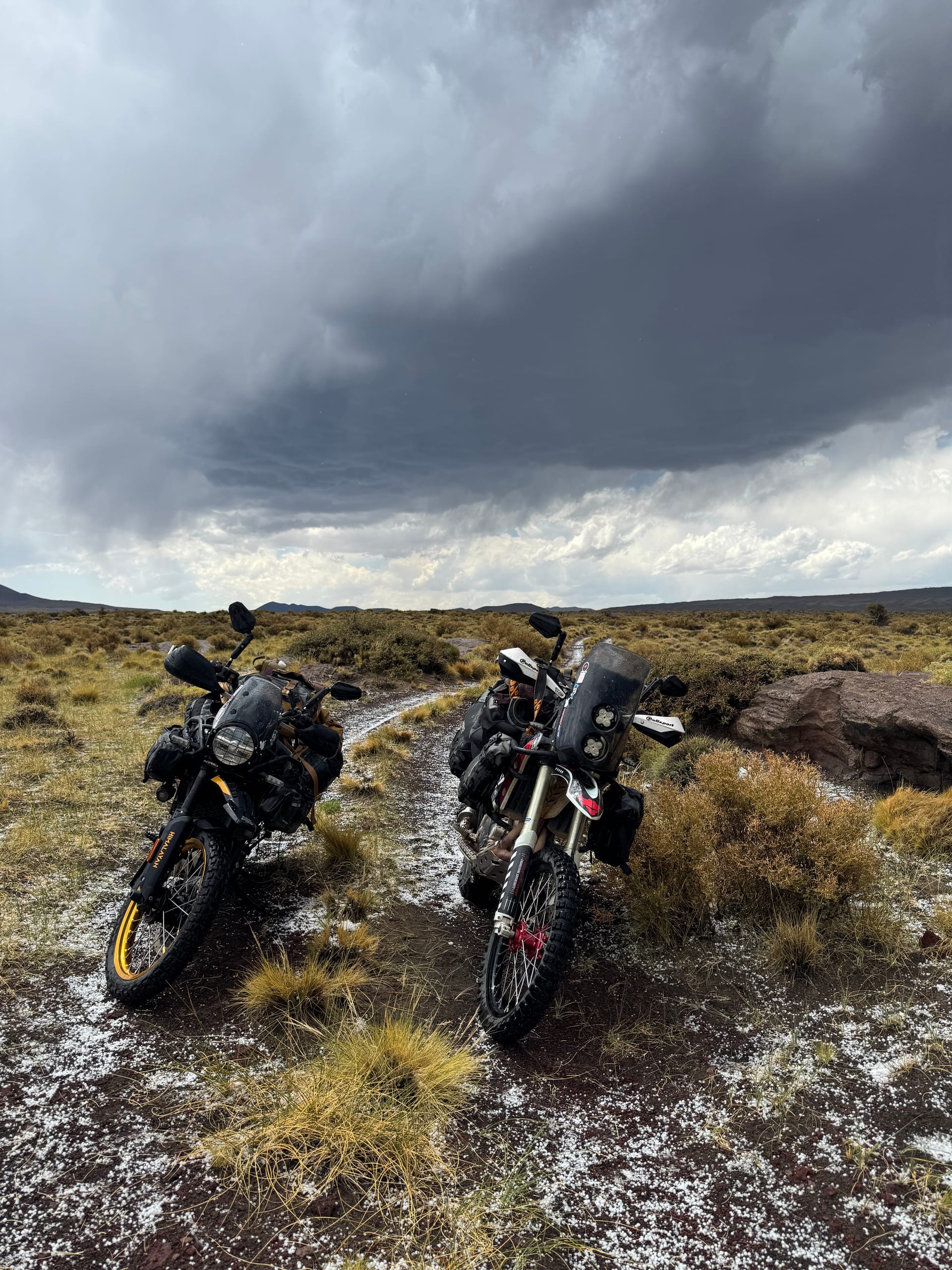
We get moving again — and then disaster. Thomas goes down in the sand. Ouch: his right ankle twists badly. His foot is pinned under the bike. Adeline has to help him get free. We don't dare take the boot off to look at it. We gather ourselves and get back on the road while he can still ride. We eventually reach the provincial ripio road, 90 km to go. The kilometers drag by — rough track, aching ankle. And then relief: the tarmac road into Rincon del Sauce around 8:15pm.
250 km of off-road in a day — we're completely done. We decide to sleep in a hotel, but it's an oil town and everything is way over budget. 130,000 pesos a night at the first place we find. It's 8:30pm, and with the ankle the way it is, we stay anyway. Chinese noodles for dinner. At least the bed is incredibly comfortable.
Chos Malal and an Unforgettable Asado
Thomas's ankle is still very sore in the morning. We decide to take the "road" to Chos Malal and rest up for a few days… except we set the GPS to "fun route". Big mistake. Apparently unmetalled dirt tracks count as roads here, and the day is particularly grueling — Adeline goes down several times. Thomas stays calm all day, supporting Adeline every time she starts to break, despite his own painful foot. These hard days teach us to function as a pair: when one cracks, the other takes over.
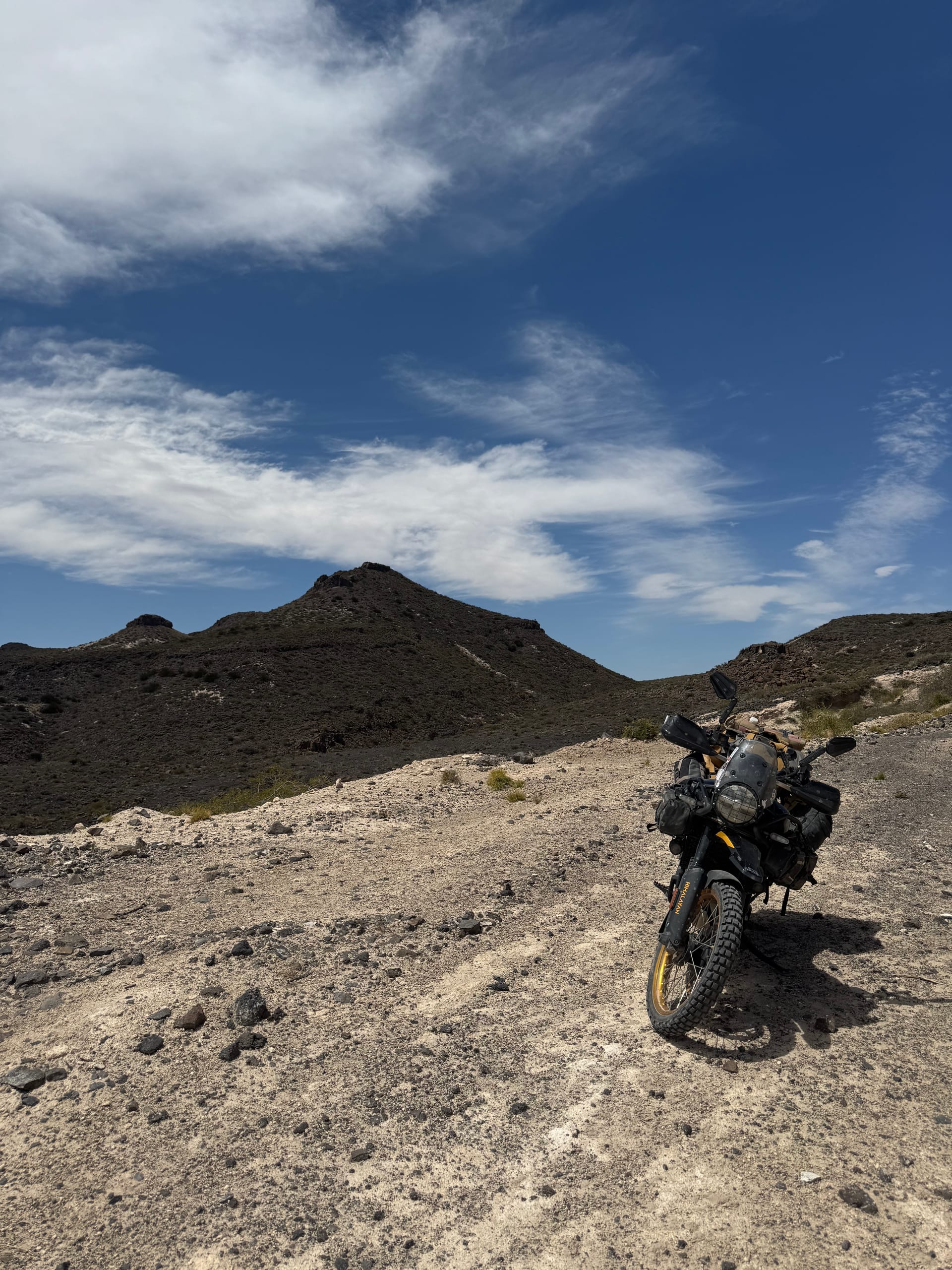
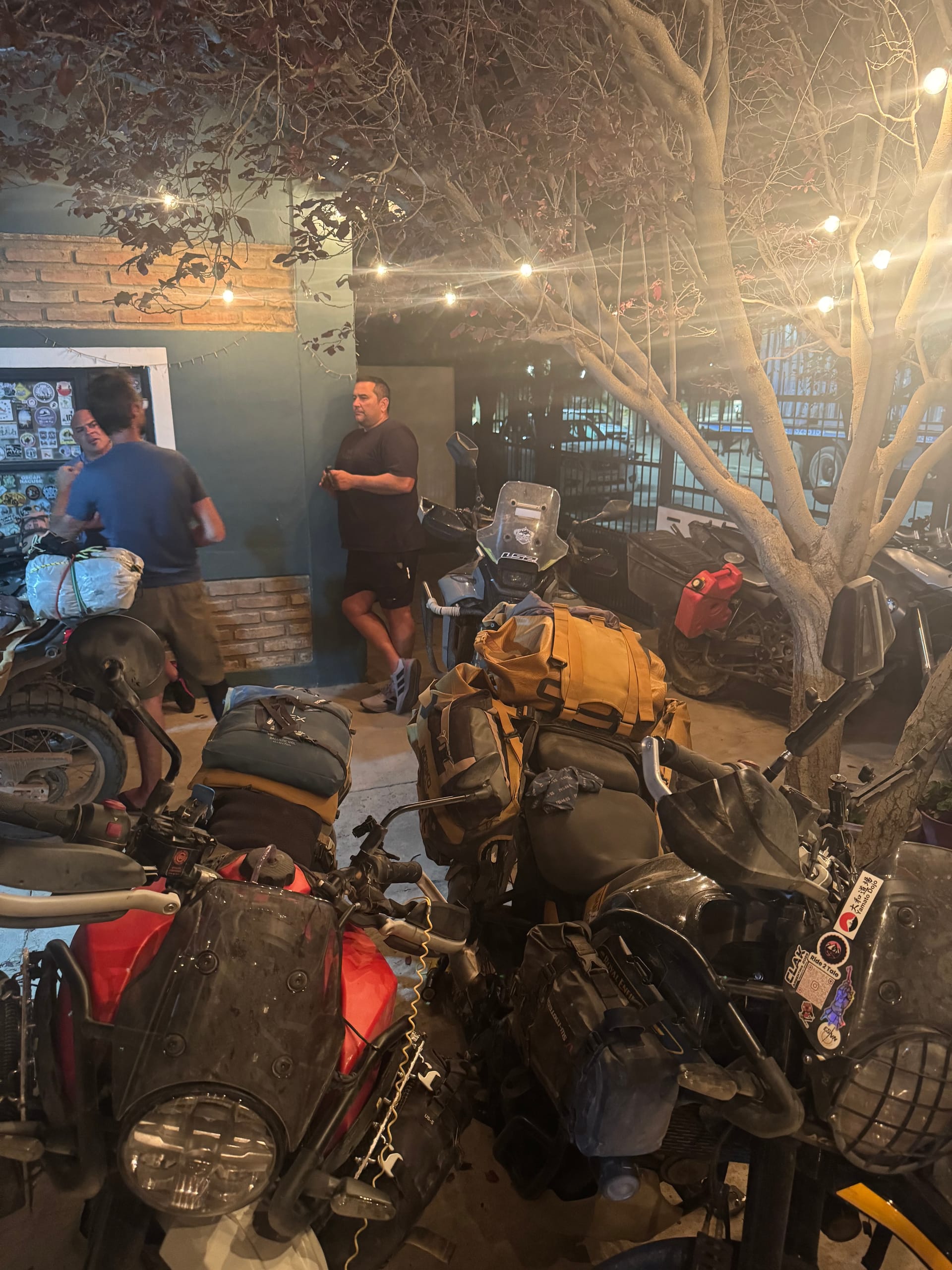
At the biker stopover in Chos Malal, the rest is welcome. And then there's the asado. It's a tradition here: Nestor, the owner, puts one on regularly to share a good evening with travelers. Around the table tonight: Stuart, an Englishman who speaks not a word of Spanish, Pablo and Pablo (yes, two of them), Nestor, and a third Argentine. We spend the evening switching between English, Spanish, and French. Politics, economics, travel. Thomas ends up talking Bitcoin with one of the Pablos until 2:30am. Our Spanish is now good enough to have real conversations with people — and that's one of the most important parts of this trip.
Route 40 Toward Bariloche
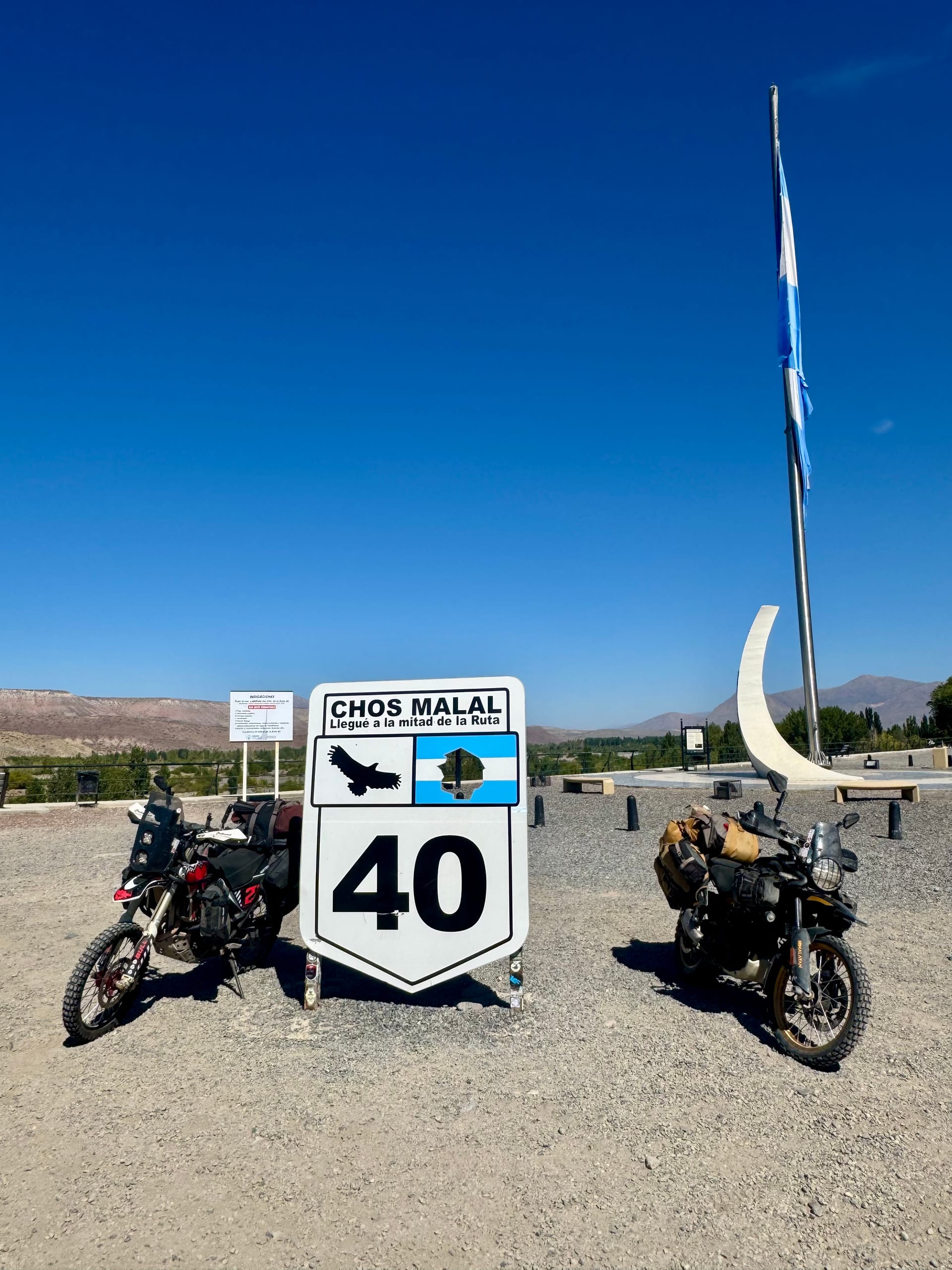
We leave Chos Malal with Thomas's foot feeling better. Adeline double-checked the route with Nestor: road or easy ripio, no serious off-road. We take provincial route 21 on his advice — easier going. Beautiful scenery, we enjoy every bit of it. We stop for a photo at the monument marking the halfway point of route 40. We haven't ridden the whole thing, but symbolically, we take the photo anyway.
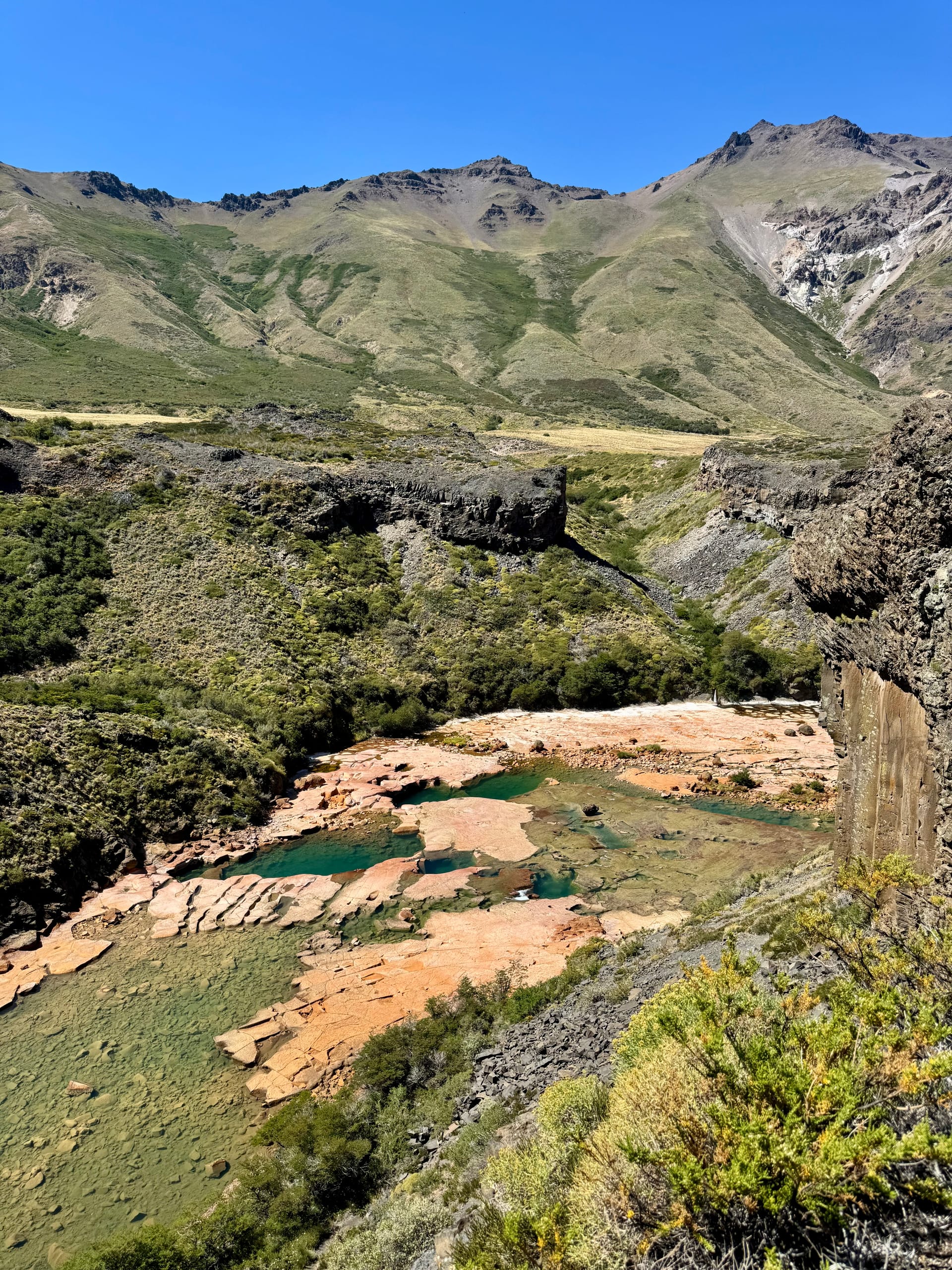
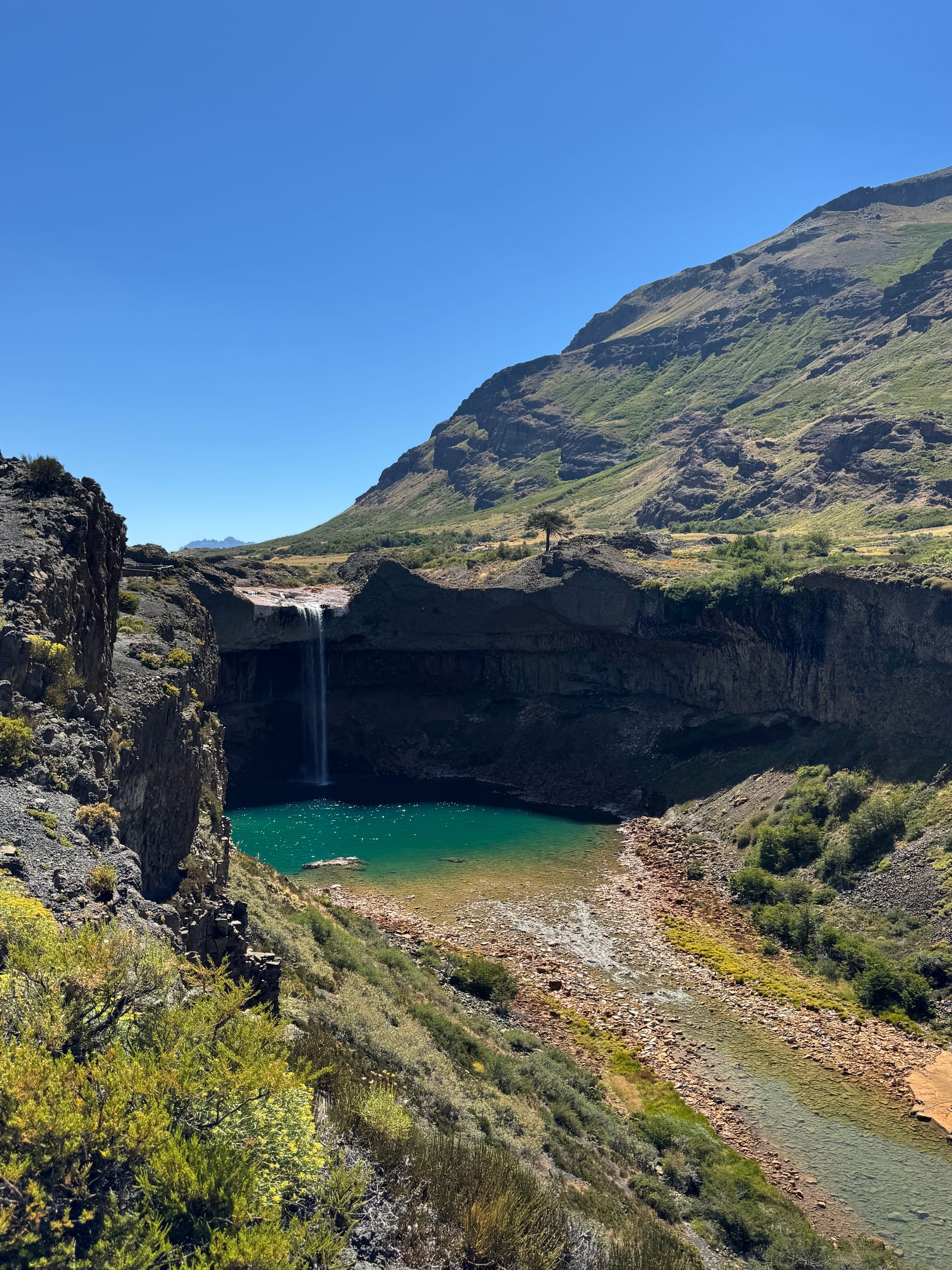
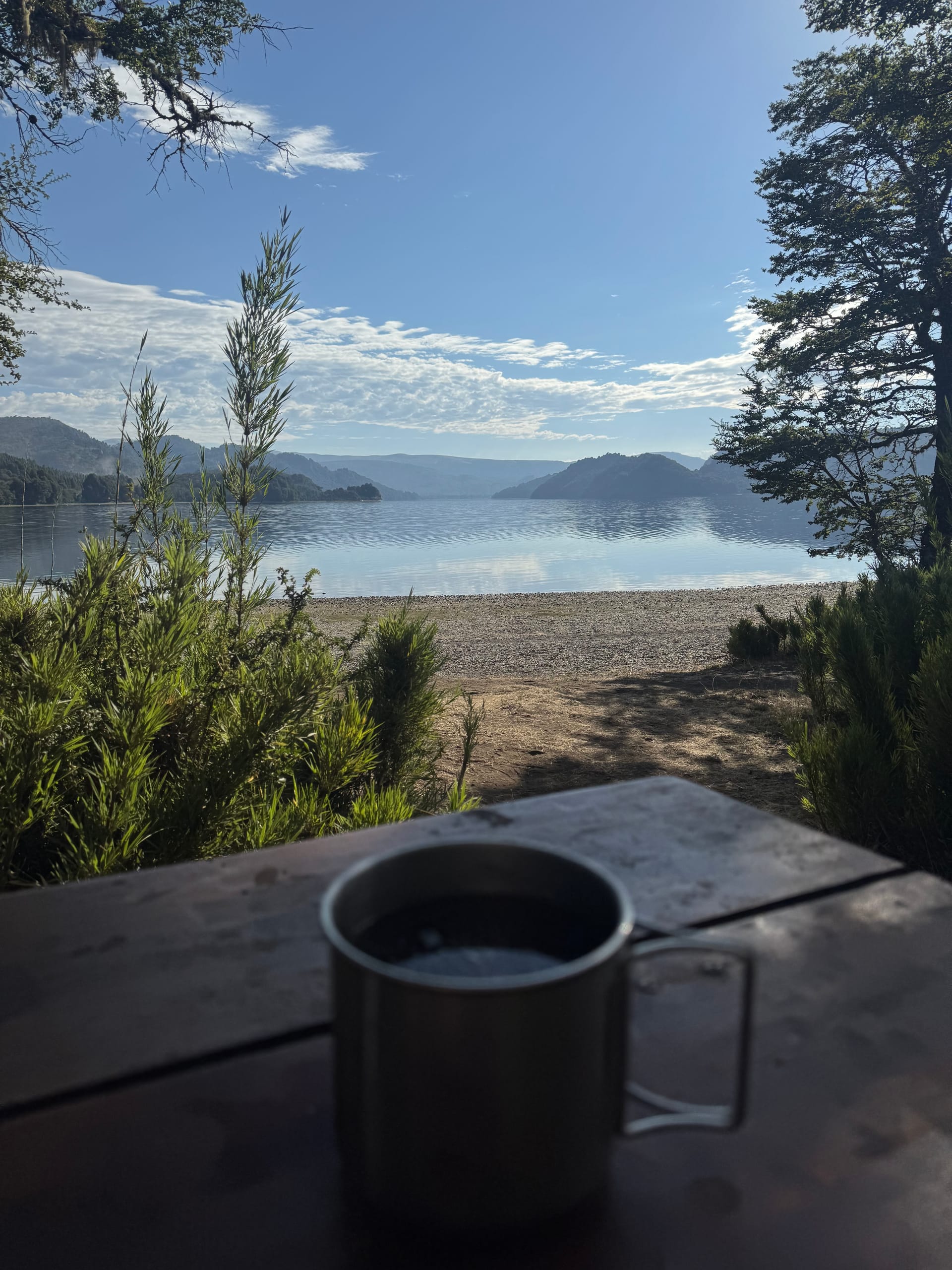
We stop for a night in Caviahue, by a lake in the middle of the mountains. Patagonia is steadily winning us over. We pass the Cascada del Agrio — not as dramatic as Iguazu, but the water is turquoise blue. Very beautiful.
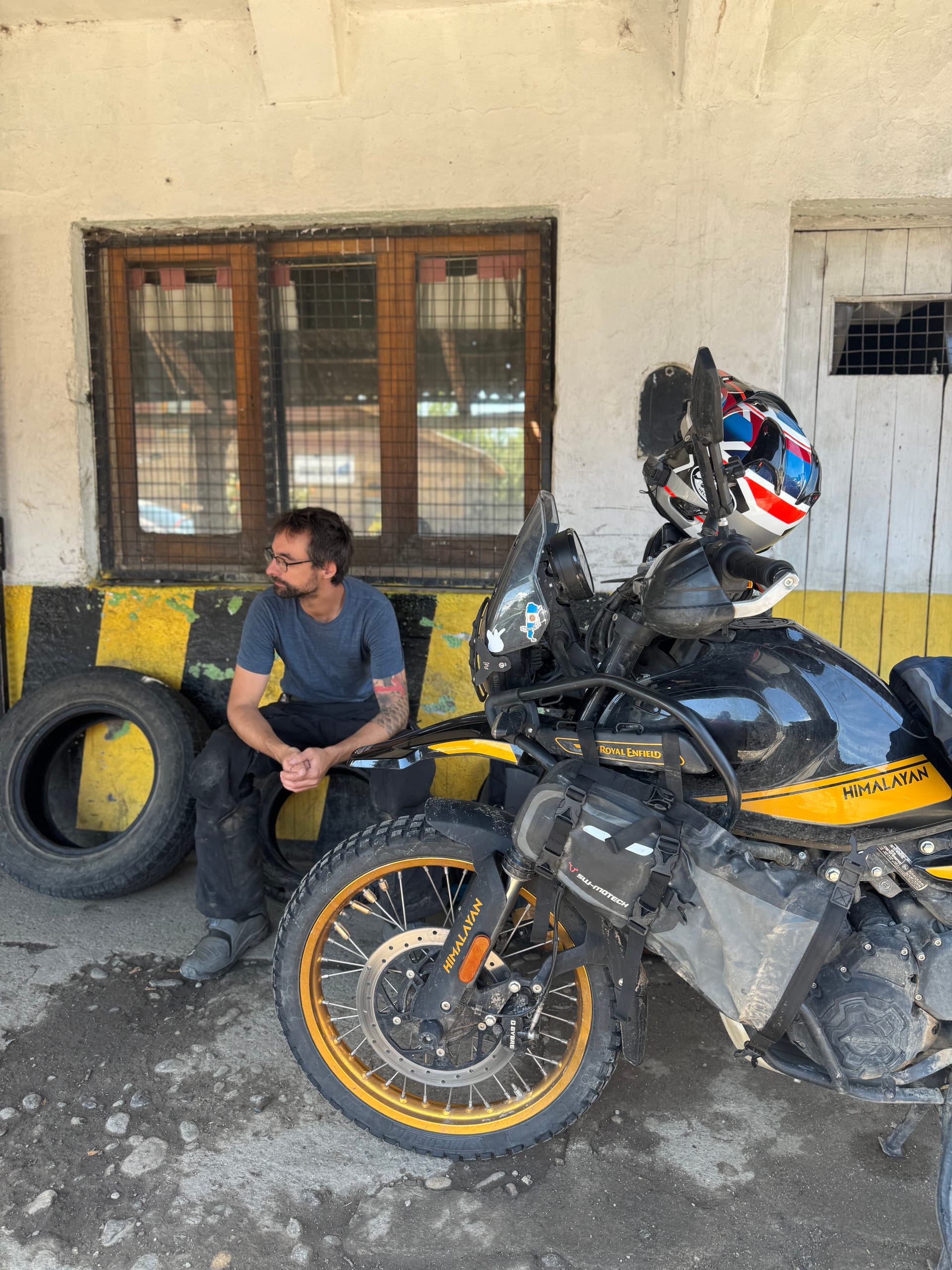
A few days later we roll into Junin de los Andes with a slow puncture on the Himalayan. A fish hook buried in the tyre that over several days worked its way through to the inner tube. Unbelievably unlucky. We find a tyre shop to fix it. While we wait, an older gentleman gives us recommendations on places to visit, and the mechanic brings out maté — the hospitality of Argentines is genuinely incredible. Less than an hour later it's fixed, we swap stickers, and we're back on the road.
Bariloche and the Tyre Wait
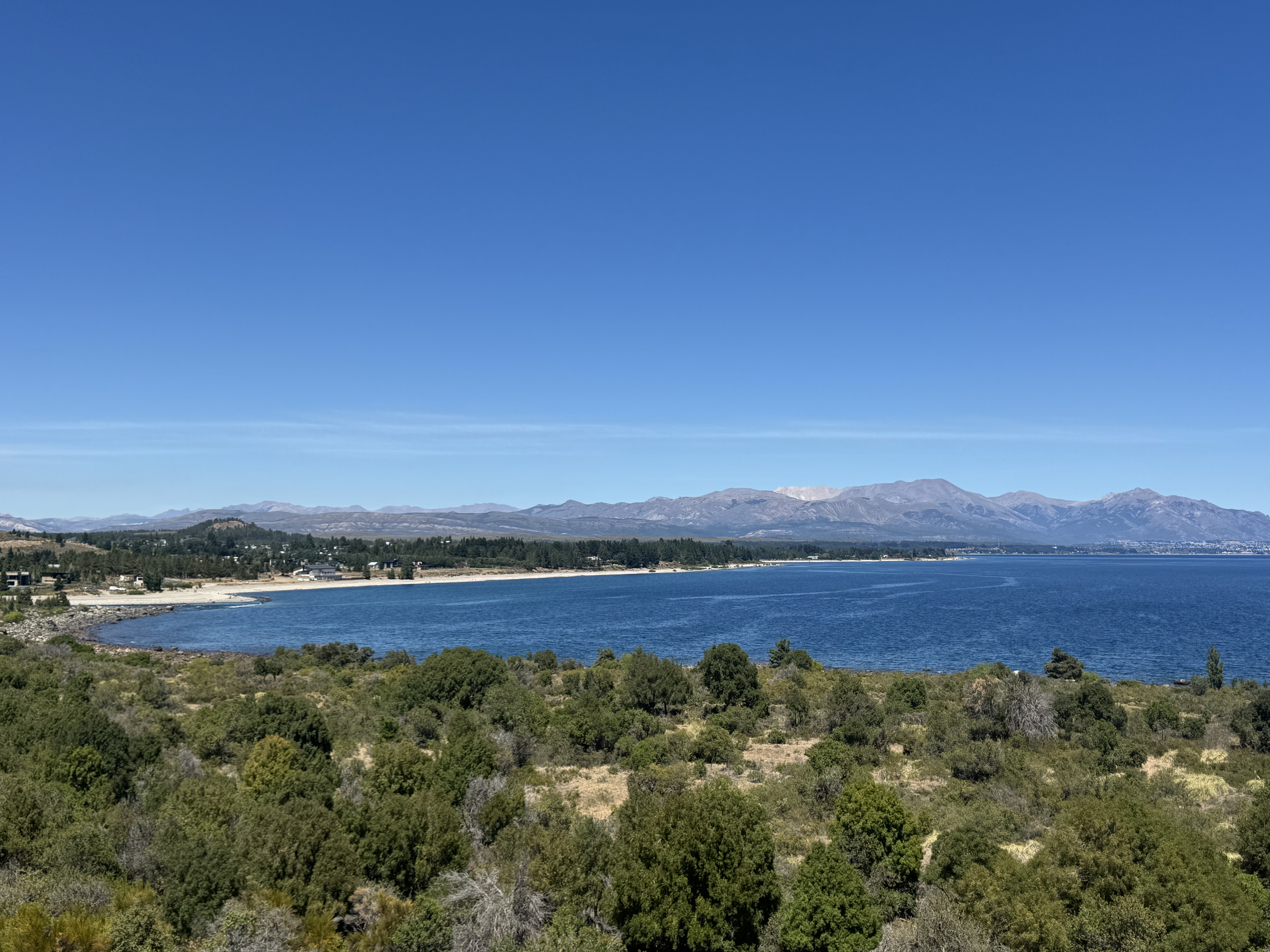
Bariloche is a ski resort without a single ski lift or drag lift — oddly surprising. Everything is expensive. We wanted to have a snack looking out over the lake; the prices put us off. We make good use of the stop regardless, meeting Philippe and his partner who are heading down to Ushuaia and back up on route 40.
Kendo, naturally. The club is barely a year old, but the instructor is on the Argentine national team. We have a great session.
But the real story is the Himalayan's rear tyre, which needs replacing. We wait three days for delivery. Adeline keeps asking Thomas whether he's had a message. The tyre finally arrives, we head to the garage, expecting it to be done in 30 minutes. We wait an hour and a half on site — tranquilo, tranquilo… The tyre's fitted, the chain tension adjusted, but the price stings: €300 for a rear tyre. We're hoping it'll do at least 10,000 km.
We finally leave. 125 km to El Bolson and a charming little campsite. The forecast says 5°C tonight. Thank goodness for good sleeping bags.
Follow our adventures
Get an email for every new article.