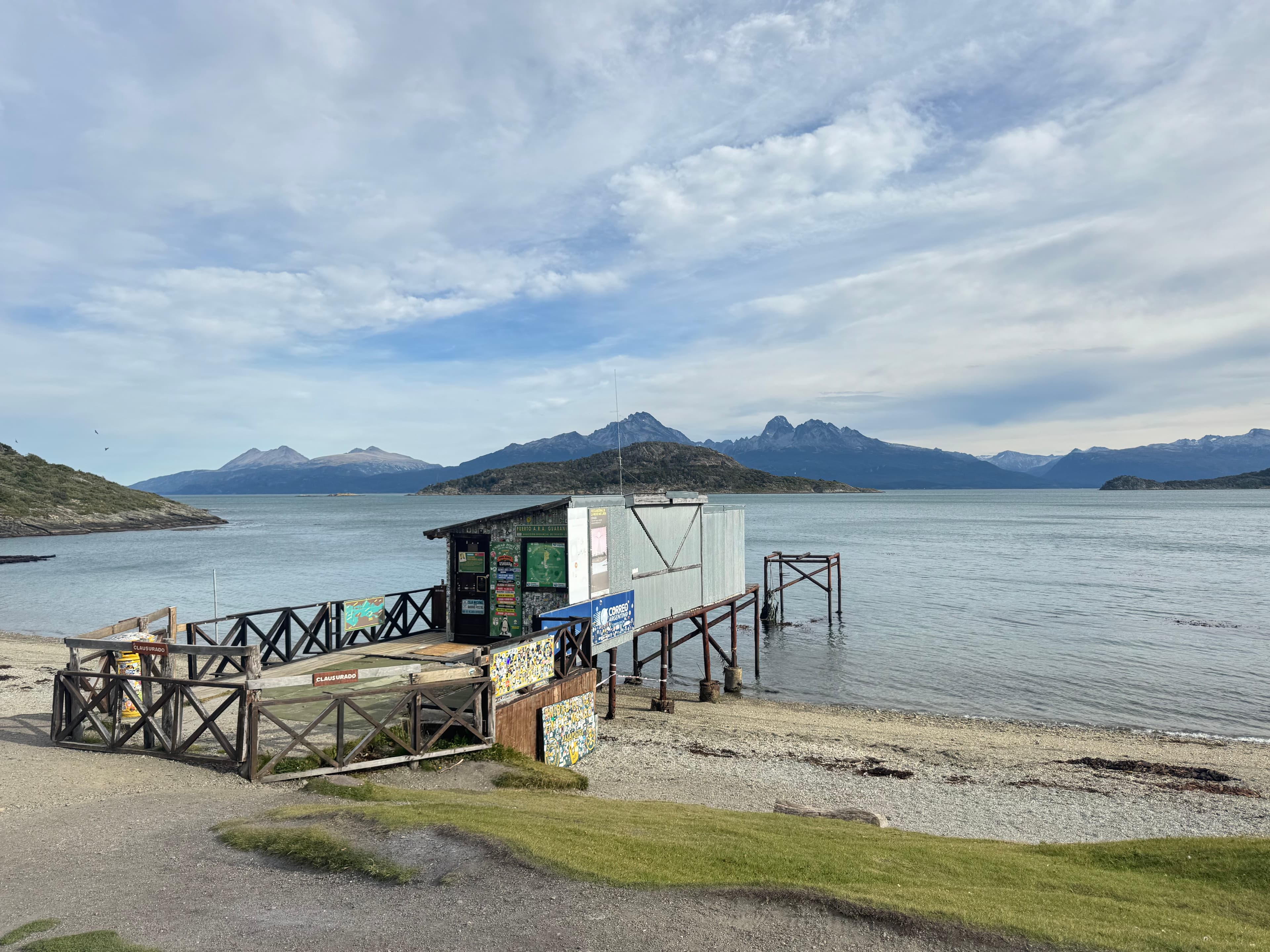
Tierra del Fuego by Motorcycle: Nine Days at the End of the World
"Ushuaia had been a goal for a long time. But it's not an end in itself."
Tierra del Fuego — we finally made it. Nine days on the southernmost island in the world, between free refuges, guanaco-dotted trails, kendo at the end of the earth, and an arrival in Ushuaia that genuinely moved us.
First Kilometres on the Island: Chilean Ripio and a Makeshift Refuge
We leave Porvenir after a good night's rest. Thomas lost his merino gloves on the ferry. We try the harbour master's office, then the boat itself — nothing. Between all that, we set off an hour late, but we're ready to discover the Chilean ripio: nothing like the Argentine version. It's wide, smooth, almost a highway. We can't believe it. That said, we had to pick up a 5-litre jerrycan of fuel, since petrol stations are scarce out here, especially cutting through the heart of Tierra del Fuego.
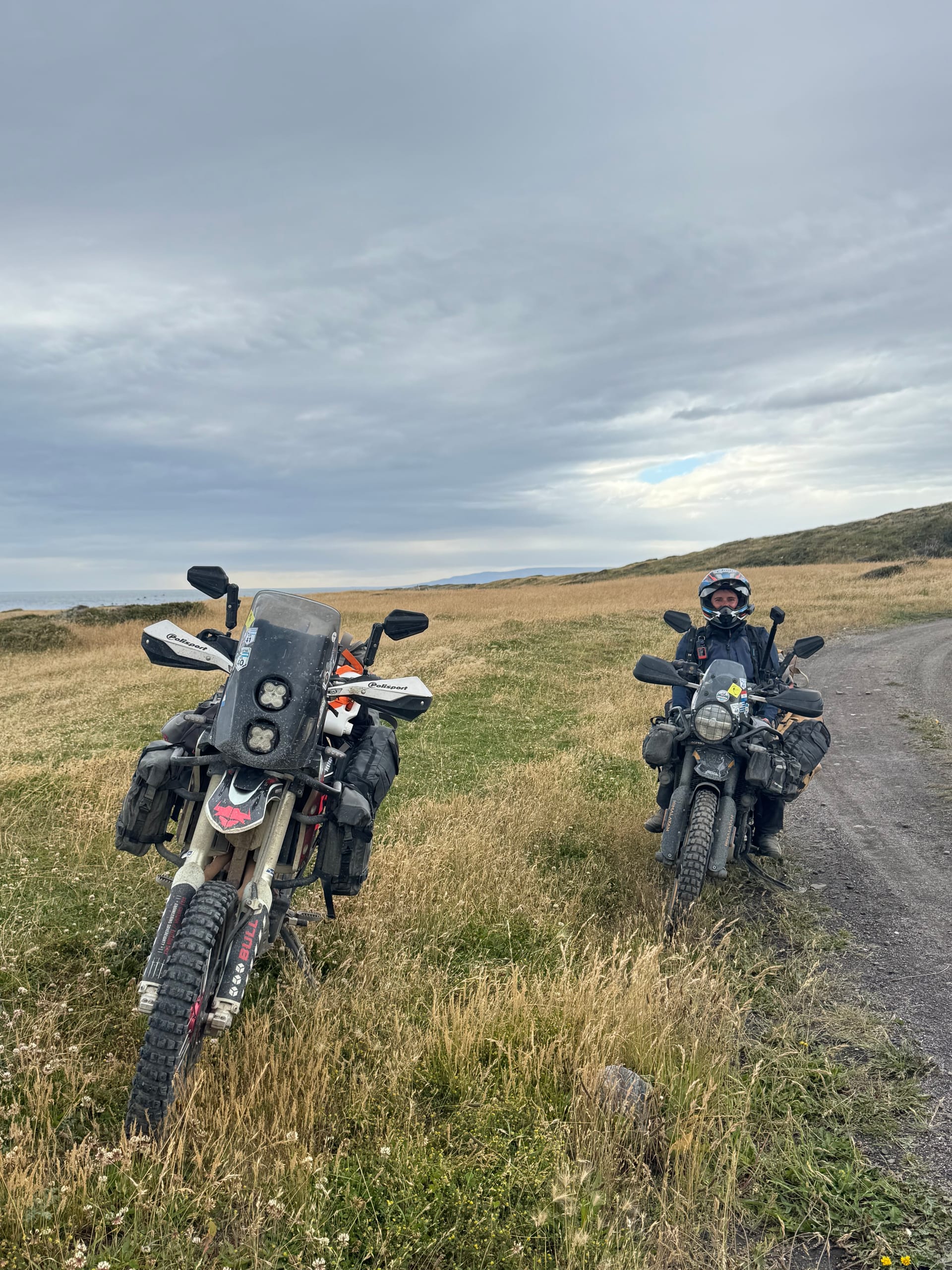
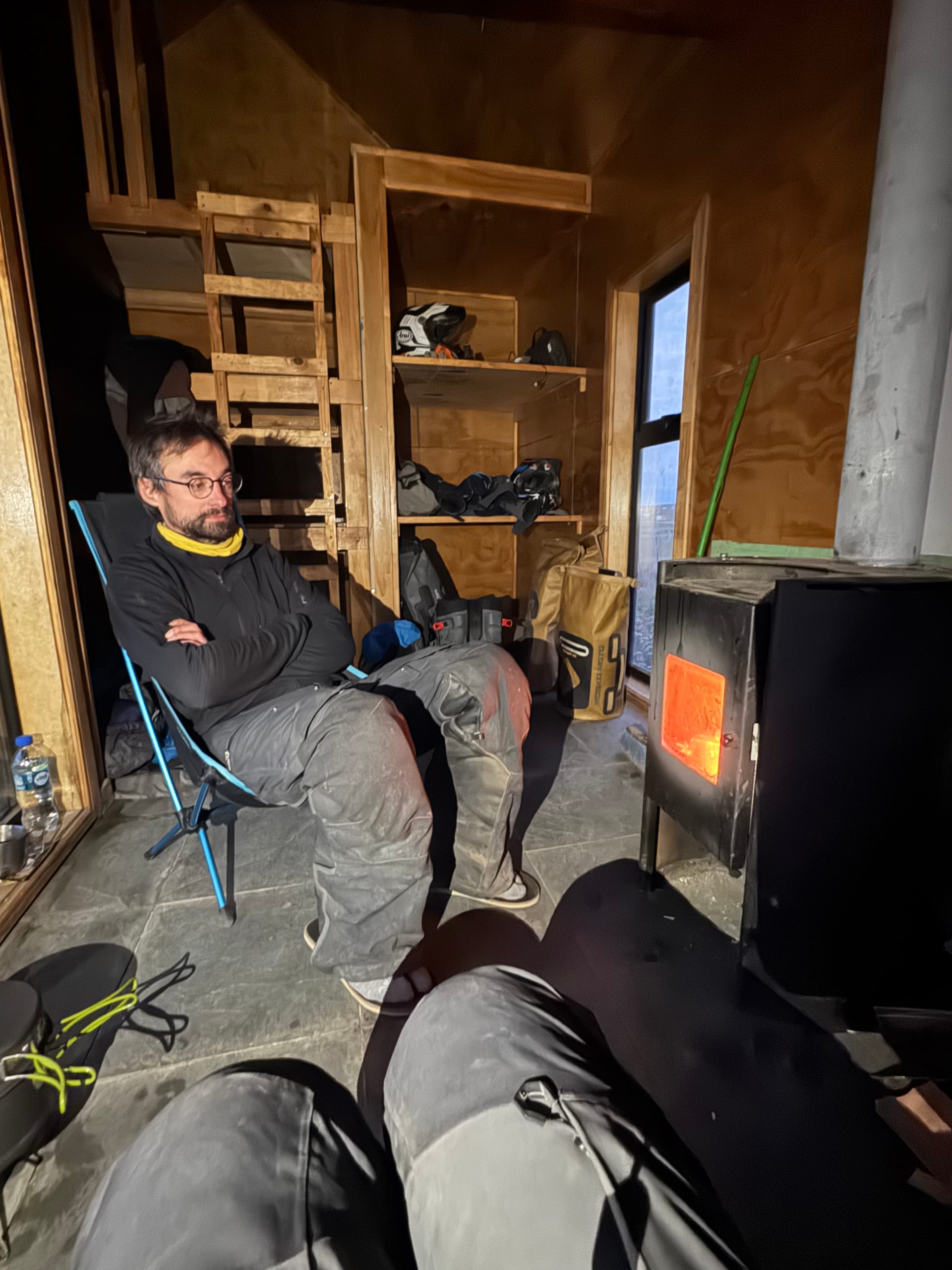
Early afternoon, we stop at the penguin reserve. A couple of bikers who set out from Mexico tell us it's worth the detour, but we find it pricey and the 2 p.m. session is full. No regrets — we push on to Cameron. It's a tiny village, but it has a shop where we can grab lunch. Meagre pickings, but it's the only store within 200 km, so we make the most of it. We spend the rest of the afternoon riding the coast. Completely disconnected, out of time, far from everything — the landscape is arid and harsh, but strikingly beautiful. For the night, a cyclist tipped us off about a free refuge at the edge of the village, while the campsite is relatively expensive. We settle in: there's a fireplace and fold-out camp beds. It's not particularly warm, but we're sheltered from the wind and the rain that rolls in right as we get settled. Perfect timing.
The Illegal Petrol Station and the Lakes at the End of the World
In the morning, we head for Parador Rusfin to fill up. When we arrive, we're not quite sure what we're looking at: factories, farm machinery, and at the back, a hotel complex. The owner explains that under Chilean law he was forced to close after 30 years of operation — but he still sells fuel because demand is high and there's nothing else for miles. 25 litres for 50,000 Chilean pesos: we're paying top dollar. We also treat ourselves to a hearty breakfast: €15 per person. Ouch — luckily the omelette is excellent. The morning's budget is blown before we've even started the engine, but at least we can carry on with full stomachs.
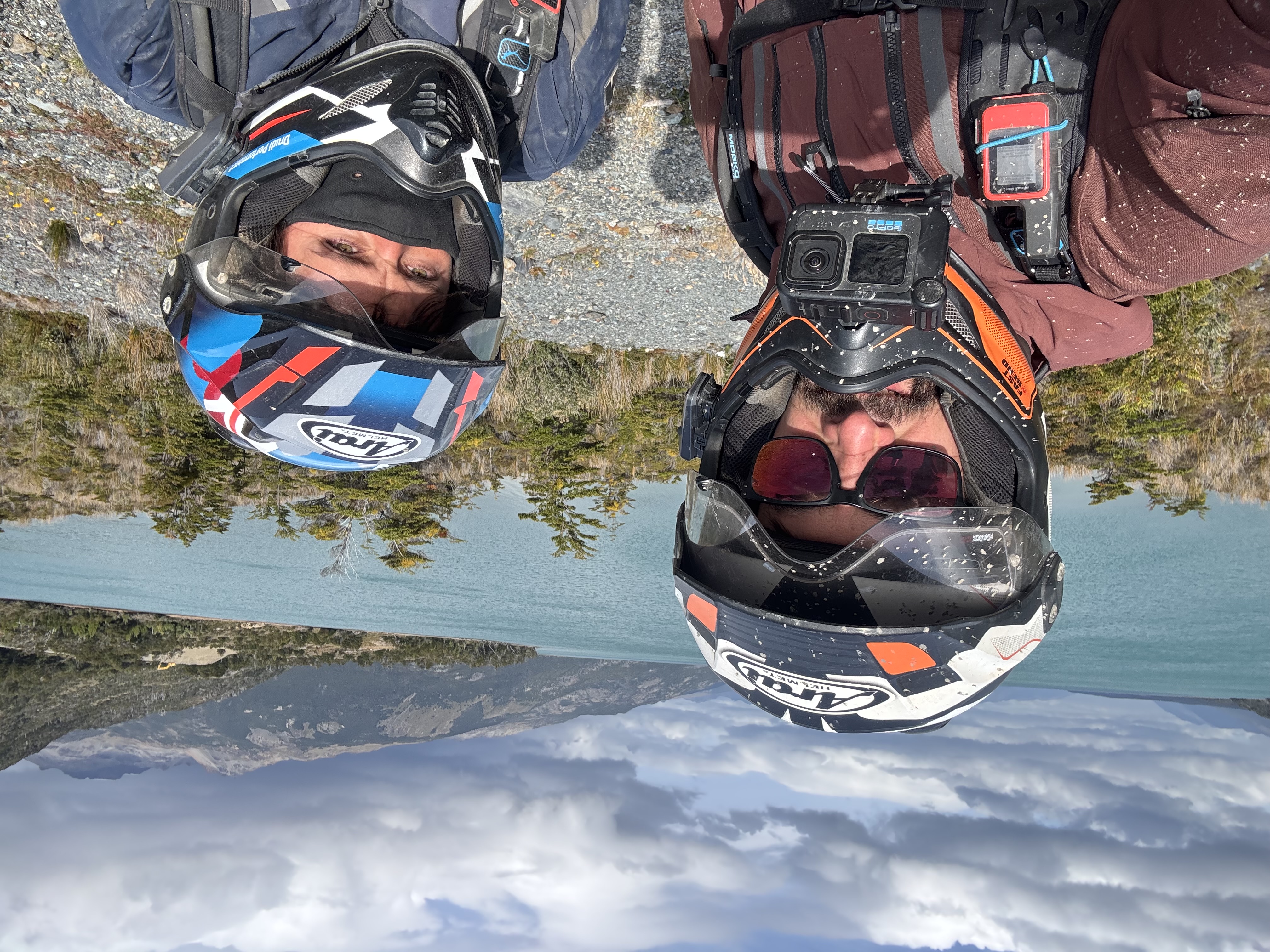
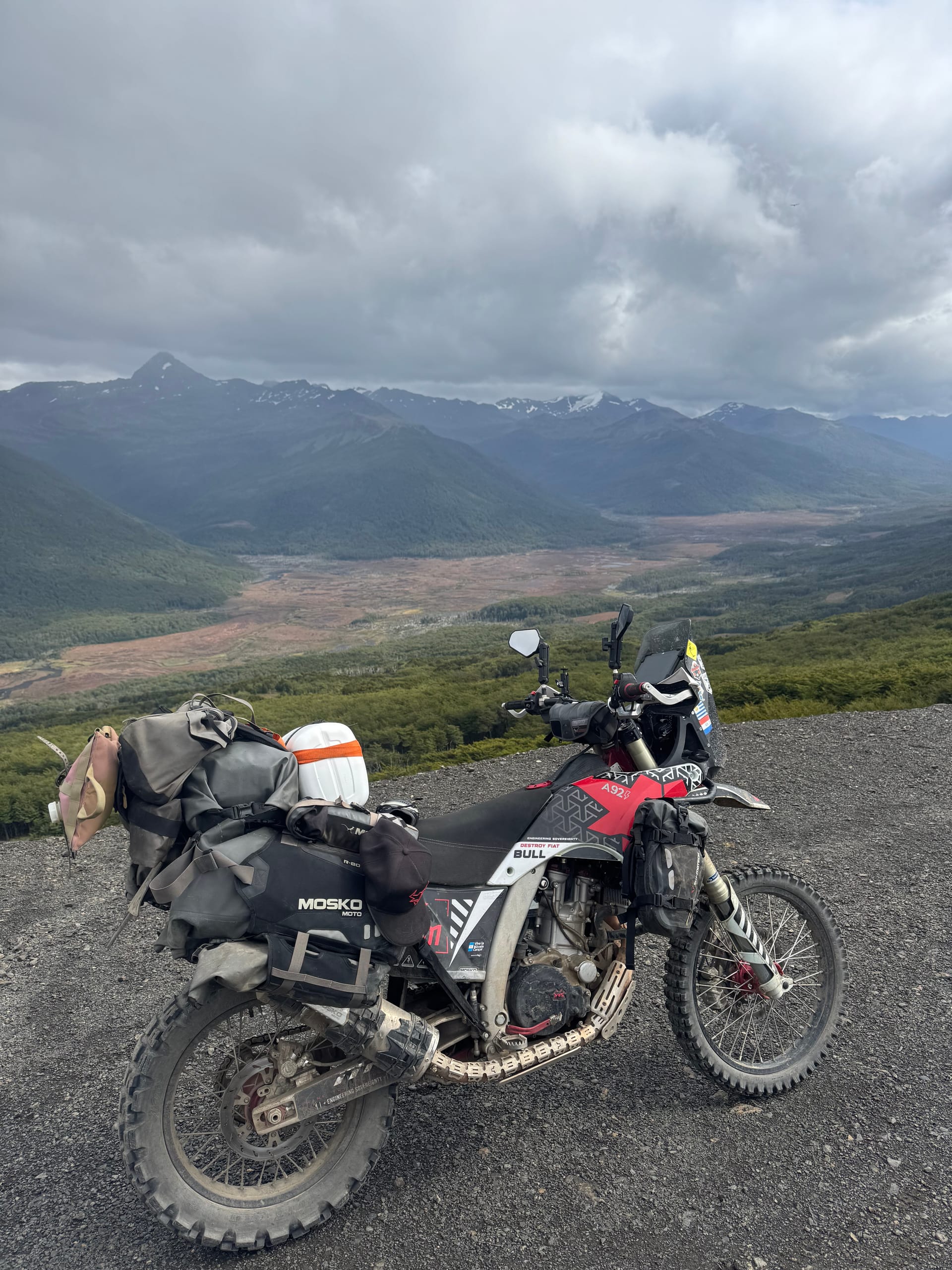
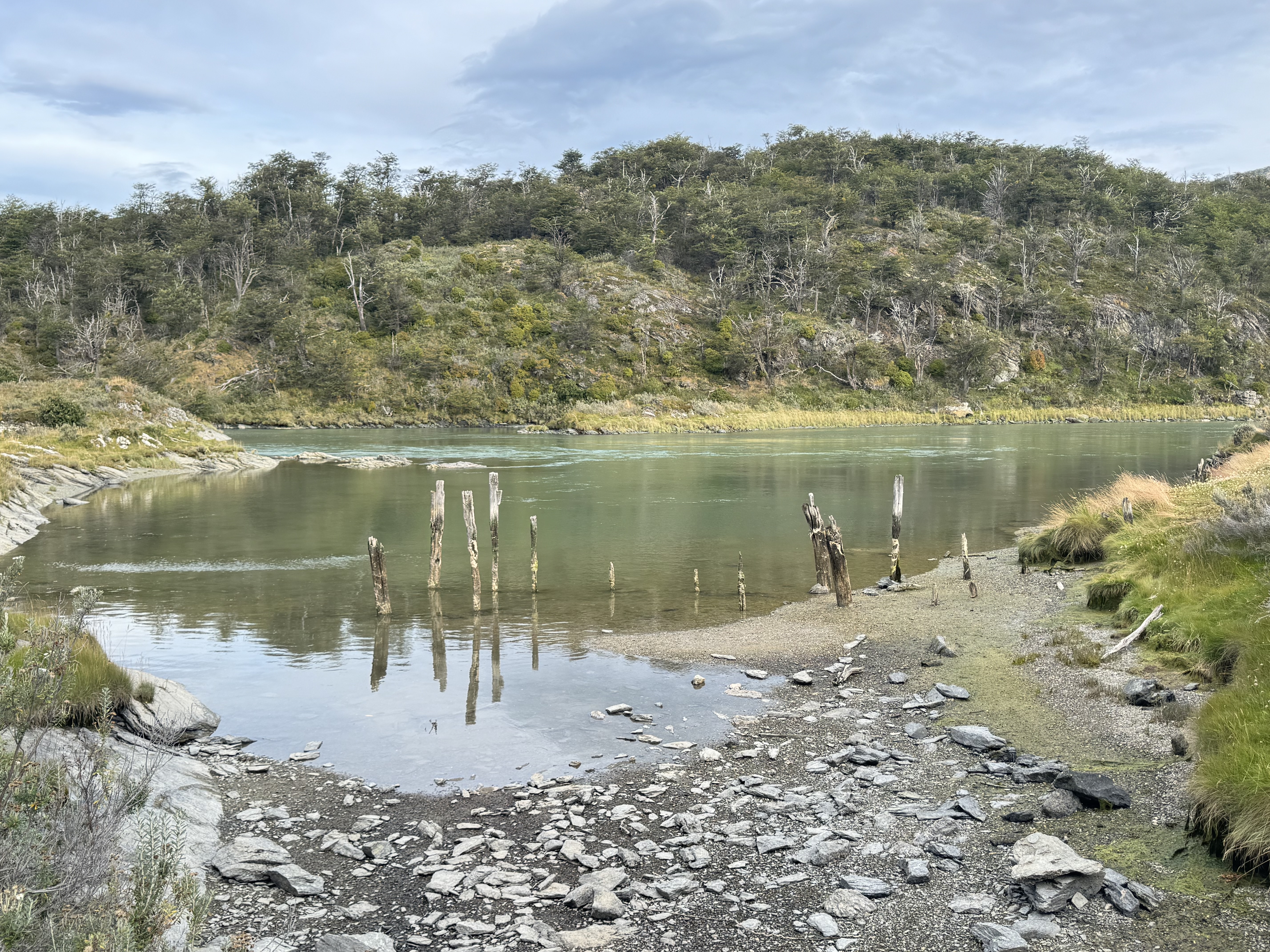
40 km further on we reach Pampa Guanaco: another ghost village. But poking around, we find a refuge with a kitchen and hot shower — improbable! We decide to come back here to sleep tonight; there's not much else in the area anyway. We head out to explore the lakes. The track is easy, but guanacos bolting across the road at the last second keep us on our toes. We discover Lago Deseado from the hillside — its red reflections are mesmerising — then Lago Fagnano, vast and turquoise. Back at the refuge, a hot shower is very much appreciated after a night of bivouacking. Cyclists roll in around 8:30 p.m. We make room, though they don't even bother with the hot shower — what a waste!


Rio Grande: Thomas Runs the Kendo Class
We cross into Argentina at noon through a border post lost in the middle of nowhere. The customs officers emerge from their cabins to do their job — not much traffic comes through here. We arrive in Rio Grande around 2 p.m. There's a kendo class tonight and the dojo can lend us armour. Let's go.
The sensei holds a first dan. Learning that Thomas is a fourth dan, he asks him to lead the session. Thomas isn't thrilled, but there's no getting out of it. The club's level is decent for a small outfit. We share a beer with the members afterwards. That's part of travelling by motorbike too: finding yourself leading a kendo class at the end of the world on a Monday night, without having asked for any of it.
Ushuaia: The End of the World, At Last
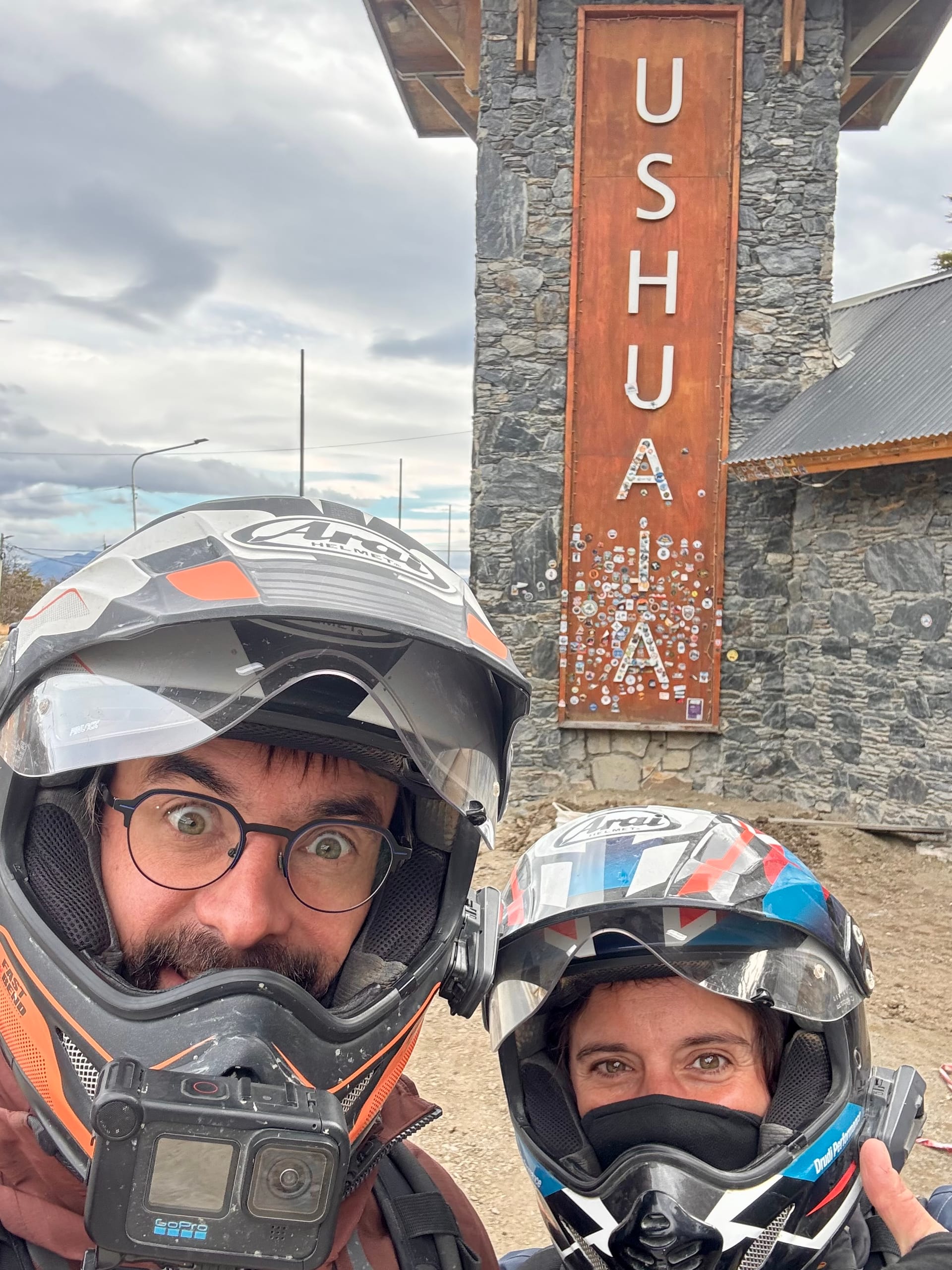
The day. We hit the road knowing we're going to make it. We're as excited as kids on Christmas morning. What we didn't know is that the final stretch is mountain road — hairpin bends, views, forests. A good surprise! We reach the edge of the city at 5 p.m. Unbelievable — we're here. We of course take THE photo: both bikes in front of the sign, and some kind of emotion that's hard to put into words. We left months ago with this goal in mind, and now we're standing in front of it…
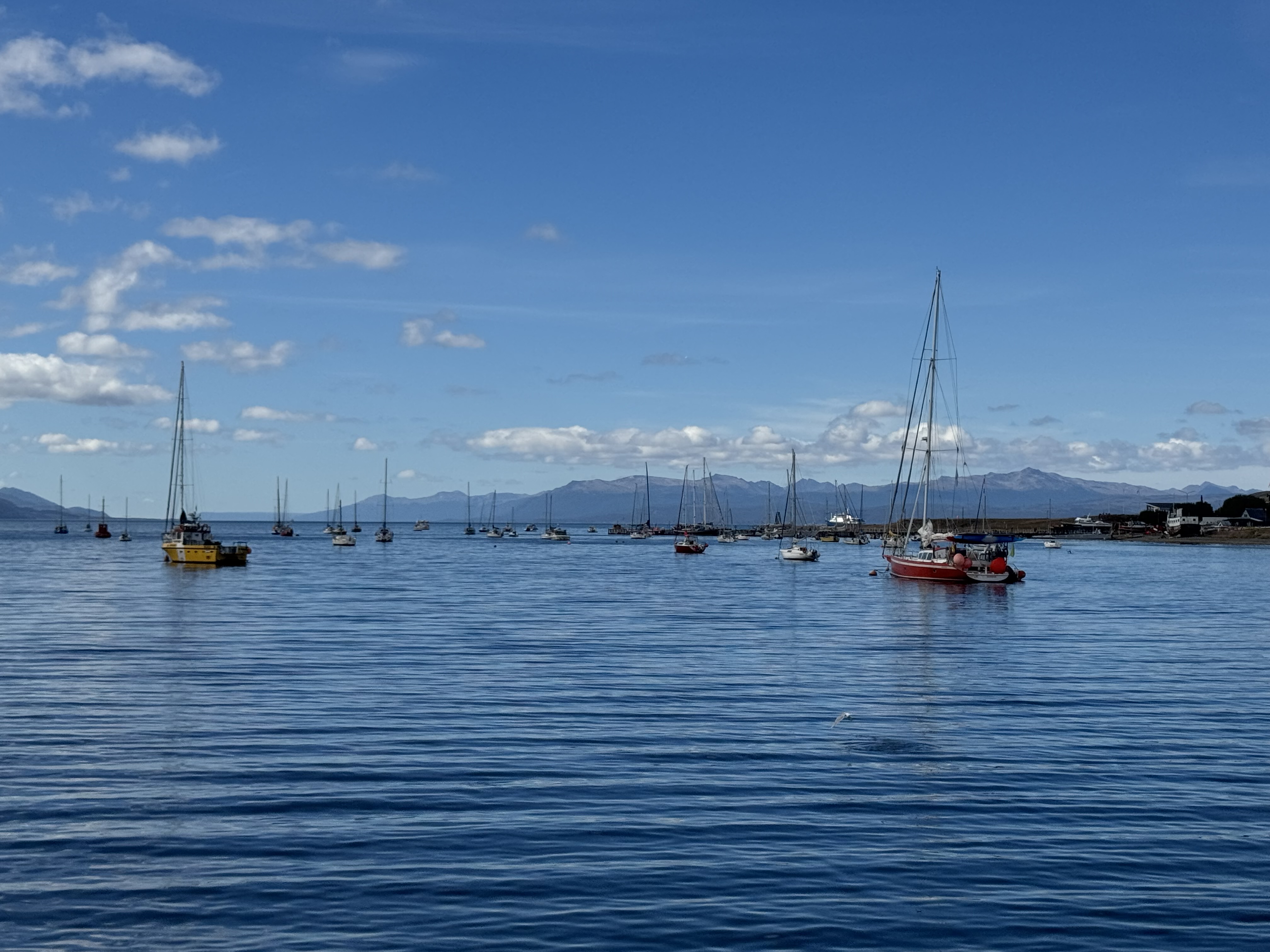
The city is surprising. At the entrance it's industrial, port-like, nothing special. But as you push deeper into the streets, mountains appear everywhere. We're staying at a moto posada — a great spot with a warm host.
Tourist Photos, the Southernmost Post Office, and an Impromptu Asado
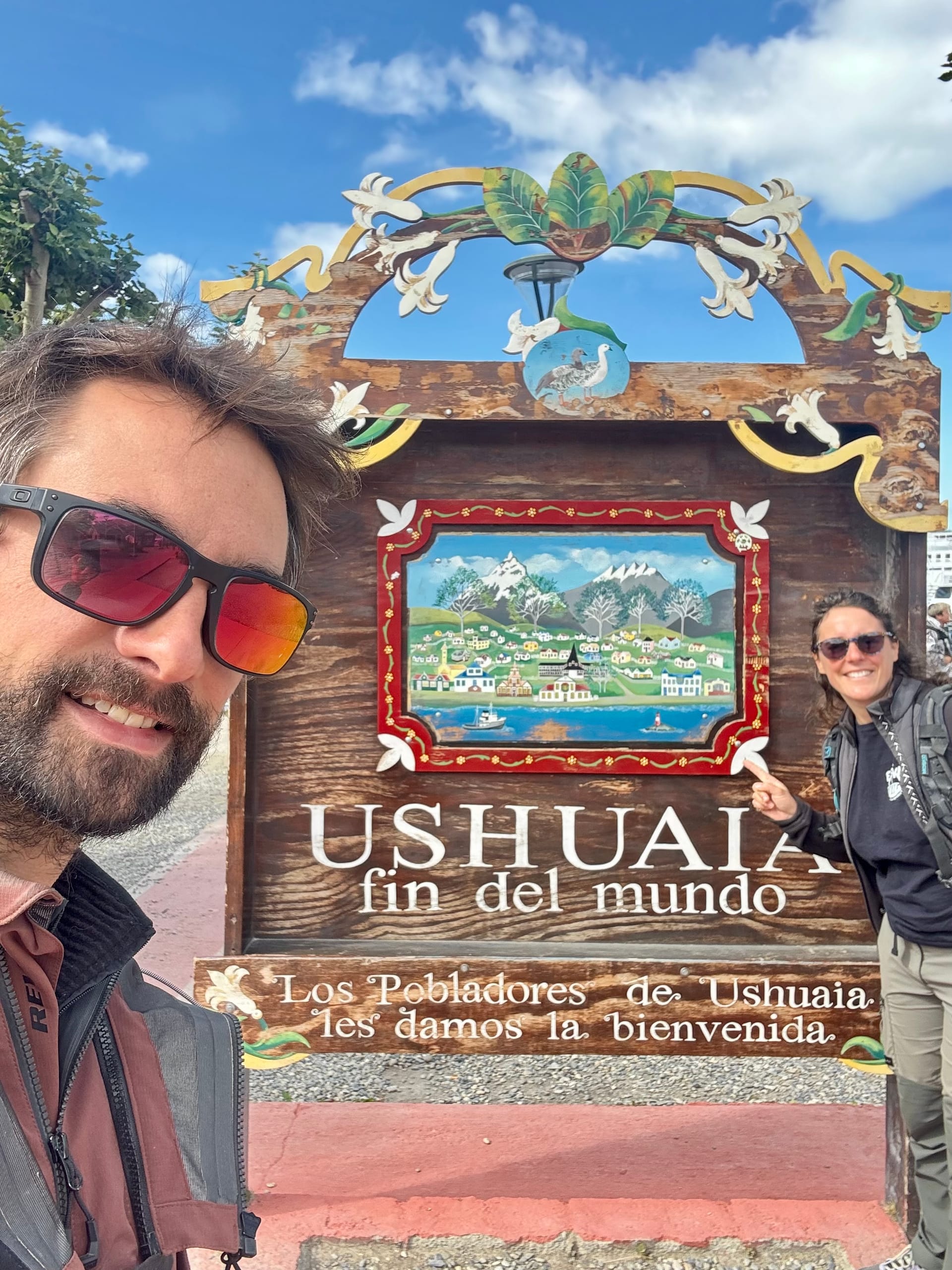
We spend two full days in Ushuaia. We've set ourselves a few missions of the utmost importance: get a photo at the El Fin del Mundo sign and in front of the Ushuaia structure. We're lucky — brilliant sunshine. We take our time discovering the city. In the afternoon we head to the national park at the very end of Route 3. We hadn't anticipated the entrance fee, but the ranger is friendly and offers us a small discount: 50,000 pesos for the two of us — we go for it. We find the famous southernmost post office in the world, nestled among shrubs and mountains. Glad we saw it. The rest of the park, though, isn't exceptional. No regrets either way — we had stunning weather.
On the way back, Thomas nudges Adeline: "guess who's here." Maer — our Tunisian friend, the one we keep bumping into on the road. We also meet Douglas, who rode down from Alaska and completed an 8-day expedition to Antarctica. We'd have loved to do it too, but it's roughly half our entire travel budget… we pass. The owner of the posada suggests an asado, which we enthusiastically accept. So much for our plans — videos and the logbook can wait. We go to bed at 2 a.m., very happy about the evening.
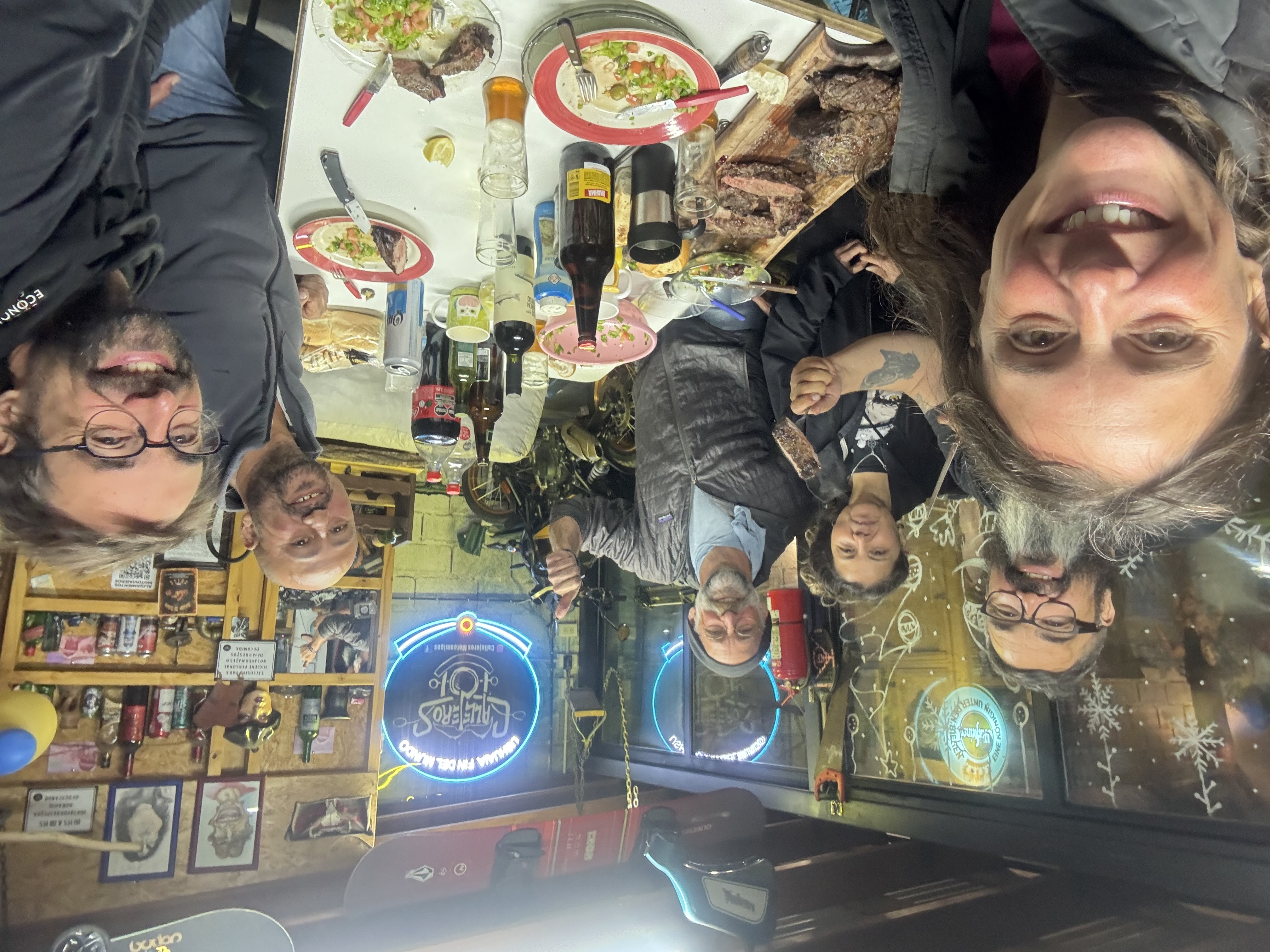
Before leaving, Douglas offers to swap his 11-litre fuel bag for our 3-litre one — too bulky for him. We have to admit that having 11 litres in reserve for the lagoon route in Bolivia suits us perfectly. A timely trade.
Leaving Ushuaia
Sadness. We pack up under the sun and head back toward Rio Grande. The 210 km won't be fun, but they're necessary. We'd happily have stayed longer, but we're hoping to catch a ferry to Puerto Natales leaving on 5 March — we need to be on time. La Carretera Austral awaits, and we want to be back in Argentina before the first autumn snows.
In Rio Grande, the hotel we'd booked tells us there's no hot water. Since Adeline didn't prepay, we move to the Fin del Mundo hotel. It's a bit out of the way, but the sea view is incredible. More importantly, it's a proper biker hangout: photos of riders from France and Latin America who've passed through line the walls. We take the afternoon to put together the four-month video retrospective. In the evening we meet Amélie, a surgical intern on a gap year. We talk about travel, mishaps, and plans — obviously. We go to bed late again, but moments like these are worth a short night.
The Cerro Sombrero Feria and the Last Ferry
Last day on the island. On the hotel owner's advice, we decide to head straight to Punta Arenas. We cross the border at San Sebastian — an hour on both sides. The Chileans search every single bag again. We stop at Cerro Sombrero for lunch and stumble upon a local feria. We're the only two tourists. Apparently food is free, but the queue is very long. We end up buying from a stall instead, and reluctantly get back on the road. We'd happily have stayed for the evening.
We reach the ferry at 4:25 p.m. It leaves at 4:30. We barely have time to load the bikes before we're off — perfect. Tierra del Fuego fades behind us. Leaving feels like something… But there's no time to linger — we still have 180 km to Punta Arenas, where we've booked a room with a local family. Next stop? La Carretera Austral!
Follow our adventures
Get an email for every new article.